Companion Planting for Vegetable Gardens: What Actually Works
Companion planting charts are everywhere, and most of them mix genuinely research-backed pairings with pure folklore, presented with the exact same confidence. Here's what university extension research actually supports.
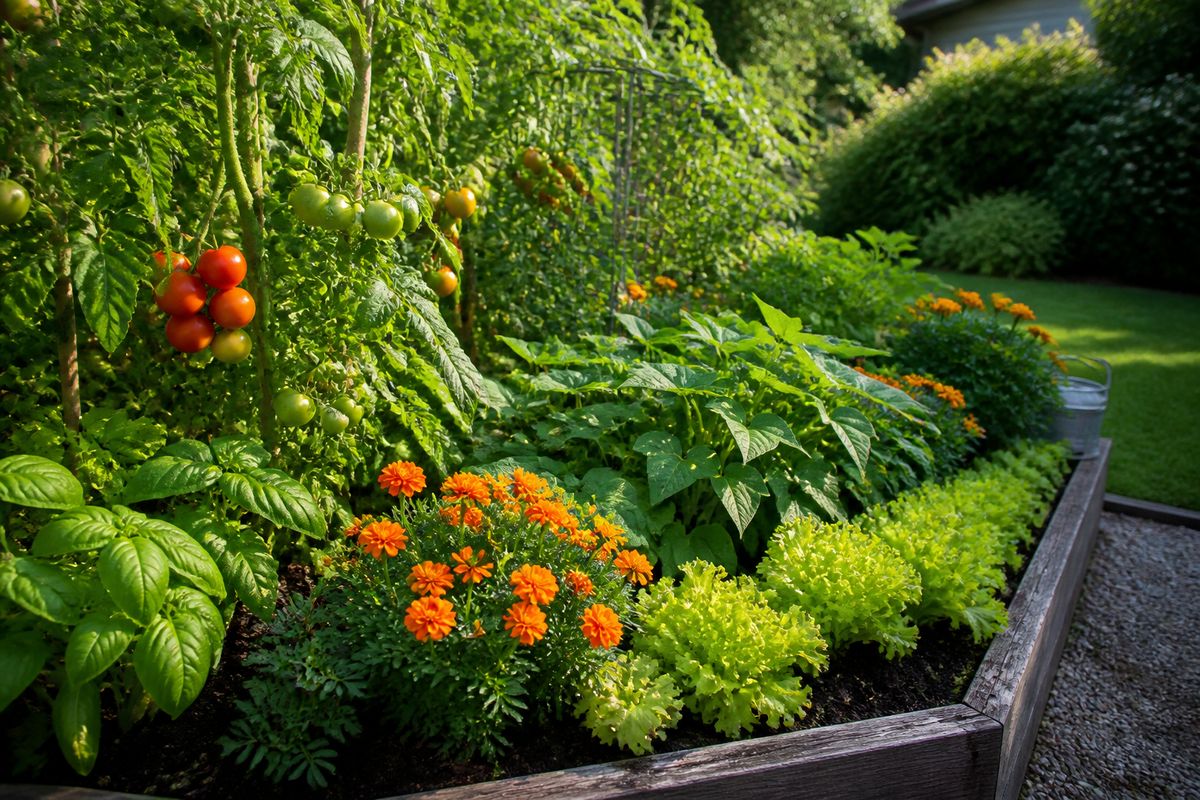
Search "companion planting chart" and you'll find dozens of lists pairing nearly every vegetable with a "friend" and an "enemy," almost never distinguishing between a pairing backed by a real study and one repeated from one blog to the next for decades. As University of Massachusetts Extension puts it plainly: the number of rigorous scientific studies on companion planting is small compared to the number of books, lists, and charts about it based on anecdotal evidence. That doesn't mean companion planting is useless — some pairings genuinely work — but a beginner is better served knowing which is which.
The Three Sisters: the most famous companion pairing, and why it works
Corn, pole beans, and winter squash grown together is the best-documented companion planting system, and the mechanism is straightforward rather than mysterious: tall cornstalks act as a living trellis for climbing beans, the beans fix nitrogen in the soil that benefits the heavy-feeding corn and squash, and the squash's broad leaves shade the soil to suppress weeds and retain moisture. It's a genuine example of three plants doing different jobs for each other, not a folklore pairing.
Well-established: space and resource pairings
These pairings work for straightforward, unglamorous reasons — different root depths, different maturity speeds, or one crop actively feeding the soil for another — rather than any pest-repelling magic:
- Fast + slow crops together: radishes and carrots share a bed efficiently since radishes mature and are pulled long before carrots need the space.
- Shallow + tall crops: lettuce grown under tomatoes or eggplant, or beets interplanted between broccoli, use vertical space and different growing seasons without competing directly.
- Legumes for soil nitrogen: peas, beans, and clover fix nitrogen in the soil, benefiting heavier-feeding crops planted nearby or in the same bed the following season.
- Succession by maturity: pairing an early, fast crop (lettuce, spinach, basil) with a later-maturing one (peppers, tomatoes) keeps a bed productive across the whole season.
Backed by research: pairings that help with pests
Unlike the "plant X near Y to repel bugs" claims that circulate with no citation behind them, University of Minnesota Extension highlights several pairings with actual research support:
- Basil and marigolds planted with tomatoes have been shown to reduce thrips.
- Nasturtium interplanted with squash can reduce squash bug populations.
- Sage and thyme reduced diamondback moth damage on Brussels sprouts in field trials.
- Thyme, onion, and nasturtium together reduced cabbage looper damage on broccoli.
- Buckwheat, cowpea, and sunn hemp planted nearby increase populations of natural predators of corn earworm.
Trap cropping is a related, better-documented technique: planting a "sacrifice" crop that pests prefer over your main crop. Arugula, mustard, rapeseed, and napa cabbage planted together (three or more species work better than one alone) can redirect flea beetles away from your main brassica crop, and blue hubbard squash is an effective trap crop that draws cucumber beetles away from other cucurbits like melons and zucchini.
Folklore without much evidence behind it
Pairings worth avoiding
| Avoid planting together | Why |
|---|---|
| Onions and beans | Onions can stunt bean growth |
| Tomatoes and potatoes or fennel | Shared disease susceptibility and/or growth interference |
| Cabbage family and dill, fennel, or strawberries | Poor growth interactions reported |
| Cucumbers and potatoes or aromatic herbs | Growth interference reported |
Treat every chart as a starting point, not a rulebook
West Virginia University Extension is direct about the limits of this whole topic: companion planting is not an exact science, and results can vary by region, soil, and season. Their recommendation — and a good practice for any beginner — is to keep your own records of what you plant together and how it performs in your specific garden, rather than trusting a chart wholesale. What works in one climate and soil type doesn't always repeat in another.
Plan your beds before you plant
Working out which crops to pair, rotate, and keep apart is much easier with a layout in front of you. The Garden & Seed Starting Planner covers bed layout and rotation basics, and the Homestead Garden Master Planner includes a full companion planting matrix with an honest confidence rating for every pairing, plus frost dates, pest identification, and a yield calculator in one system. If you want to try the Three Sisters yourself, The Three Sisters Garden guide walks through the full layout, spacing, and two bonus recipes. Growing one crop at a time instead? See our dedicated guides to tomatoes, peppers, zucchini and summer squash, and cucumbers — each links to the matching printable Quick-Grow guide — and The Homestead Tomato Garden goes deeper on tomatoes, with recipes.
Browse the shop →