Keeping Chickens Laying Through Winter: A Beginner's Guide to Light, Ventilation & Frostbite
Egg production doesn't slow down in winter because it's cold — it slows down because the days get short. That one fact changes almost everything about how to respond to it, and the most common beginner fix for keeping chickens warm (sealing up the coop) is also the thing most likely to cause frostbite.
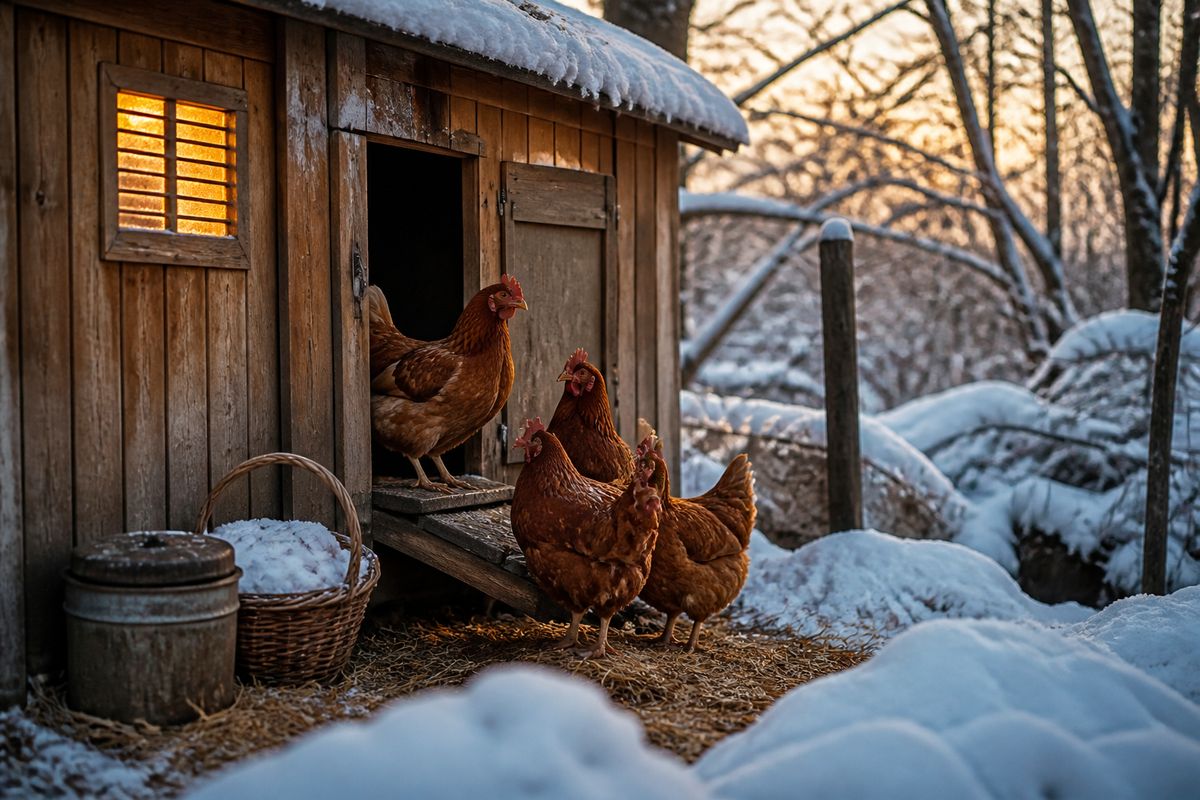
Already covering the basics of a backyard flock? See our backyard chicken flock guide for breed choice and year-round care, or our chicken coop build guide if you're still planning the coop itself. This one is specifically about getting hens through the shortest, coldest days.
Why hens actually stop laying
Penn State Extension's guidance on winter lighting is clear about the trigger: hens naturally molt and stop laying when day length drops below about 12 hours — most commonly in September and October across the U.S. This is a normal seasonal cycle, not a health problem, and hens left on their own typically resume laying again in spring as days lengthen. If you're fine with fewer eggs for a few months, you don't have to do anything at all; this is the one winter "problem" that's entirely optional to solve.
Adding light without stressing the flock
If you do want to keep eggs coming, both Ohio State University (OSU) Extension and Penn State Extension point to supplemental light as the actual fix — not heat. The two sources differ slightly on the total hours to aim for (OSU recommends 12–14 hours of daylight; Penn State recommends matching summer's roughly 16 hours), which is worth knowing going in so you don't treat either number as the one true answer. What both agree on matters more than the exact hour count:
- Add hours gradually. Penn State specifically cautions against jumping the photoperiod up all at once — change it by no more than about one hour per week. Light-stressed birds get restless and start pecking each other.
- Keep it dim enough to prevent stress, bright enough to work. Penn State's figure is a minimum of about ½ foot-candle (5 lux) to stimulate laying — a 30–40 watt incandescent, or an LED/CFL of similar output, is enough. OSU describes a comparable setup: a 60-watt incandescent or 13-watt CFL hung about 7 feet high with a downward reflector, which covers roughly 200 sq ft. Brighter isn't better here; overly bright light is its own source of stress and pecking.
- Pick a warm bulb, not a heat lamp. Penn State recommends "warm" bulbs rated below 3500K rather than heat lamps — the goal is daylight, not warmth, and heat lamps bring their own fire risk in a coop full of dry bedding.
- Add morning light, let evening happen naturally. For free-range or open-sided flocks, Penn State's guidance is to supply the extra light in the early morning and let natural sunset cue roosting — birds settling in gradually as it gets dark is safer than lights cutting off abruptly with hens still on the floor.
- Use a timer. Both sources recommend a timer over manually flipping a switch, so the schedule stays consistent and you're not the thing standing between your flock and a reliable photoperiod.
Ventilation, not insulation, is what actually prevents frostbite
This is the part that catches a lot of first-winter chicken keepers off guard: OSU Extension's cold-weather coop guidance is explicit that humid air raises frostbite risk more than dry air does — which means sealing a coop airtight to keep it warm is often the thing that causes the exact injury you're trying to prevent. A tightly closed coop traps moisture from birds' breath and from the litter, and that trapped humidity is what actually damages combs, wattles, and feet in cold weather, not the cold air itself.
What OSU recommends instead:
- Keep airflow moving. Don't seal the coop completely; a tarp or heavy plastic over open, fenced sides works as a windbreak, but it should stop short of the roofline so air can still exchange.
- Deep, dry bedding insulates without blocking air. A thick layer of dry shavings, straw, or hay keeps birds warmer from below while the coop itself stays ventilated above.
- Check litter moisture daily. Fluff or turn bedding regularly, and clean more often than you would in summer if you're running a deep-litter system. Fix leaking waterers promptly — a slow leak is a steady humidity source most people don't think to look for.
- Give birds somewhere dry to roost off the floor: 6–8 inches of roost space per bird, with roosts 1½–3 inches in diameter — thick enough that a hen's toes can wrap around and her own feathers cover her feet overnight.
- Clear snow from the run. Wet, cold feet standing in snow or slush is its own frostbite risk, separate from humidity inside the coop.
- Most cold-acclimated backyard breeds don't need supplemental heat at all in a dry, ventilated, insulated coop. If you do add heat, keep wiring out of reach of the birds and watch for both fire risk and carbon dioxide buildup in a sealed space.
Frostbite itself most often shows up on feet, combs, and wattles as skin that looks gray, black, or brittle. If you spot it, move the bird somewhere warm and let the area warm up gradually — OSU notes a gentle warm (not hot) water soak can help affected feet, but not combs or wattles — and watch for signs of infection afterward, calling a vet if anything looks off.
Water and feed need small adjustments too
Hens eat less in winter overall, but OSU's guidance is to give laying hens a small handful of scratch grain — oats, wheat, cracked corn — late in the day rather than skipping it: digesting those extra carbohydrates overnight actually helps birds stay warm while they roost. Keep mature layers on a standard 14–17% crude-protein layer feed, figuring roughly 2 lb of feed per bird per week for a standard dual-purpose breed (bantams eat less, heavier dual-purpose breeds eat more).
Water is the part that actually requires daily attention: change water at least twice a day, checking again in the evening so birds have access through the full 24 hours, and expect to check more often on the coldest days. Automatic waterers will freeze without a heated base or added insulation — and if you use a heated bowl, check it periodically, since a malfunctioning heater is a fire risk of its own. Collect eggs once or twice a day, timed with your water checks, since most eggs are laid in the morning; a frozen egg may have a hairline crack you won't see until it's cooked, so it's safest to just discard any egg you know froze.
The short version
Short days, not cold temperatures, are what actually stop hens from laying — so if you want eggs through winter, add light gradually and on a timer rather than cranking up the heat. Keep the coop dry and ventilated rather than sealed and warm; that's what actually prevents frostbite, not insulation alone. A little extra scratch grain in the evening and more frequent water checks round out the short list of things that genuinely change over winter.
Track the flock through the season that actually tests it
Log daily counts, feed, and any health notes with the Chicken Flock Record Book, or go deeper on year-round care with Backyard Chickens from Scratch, which includes its own molting and winter care chapter. Still building the coop itself? The Chicken Coop Build Guide covers the structure; our winterizing the homestead guide covers the rest of the property for the same season.
Browse the shop →More Chickens & Poultry guides
Free tool: Chicken coop size calculator →