
How to Start a Backyard Chicken Flock: A Beginner's Guide
Everything a first-time keeper needs to plan before the chicks arrive — flock size, space, temperature, feed, and predator-proofing, with real numbers.
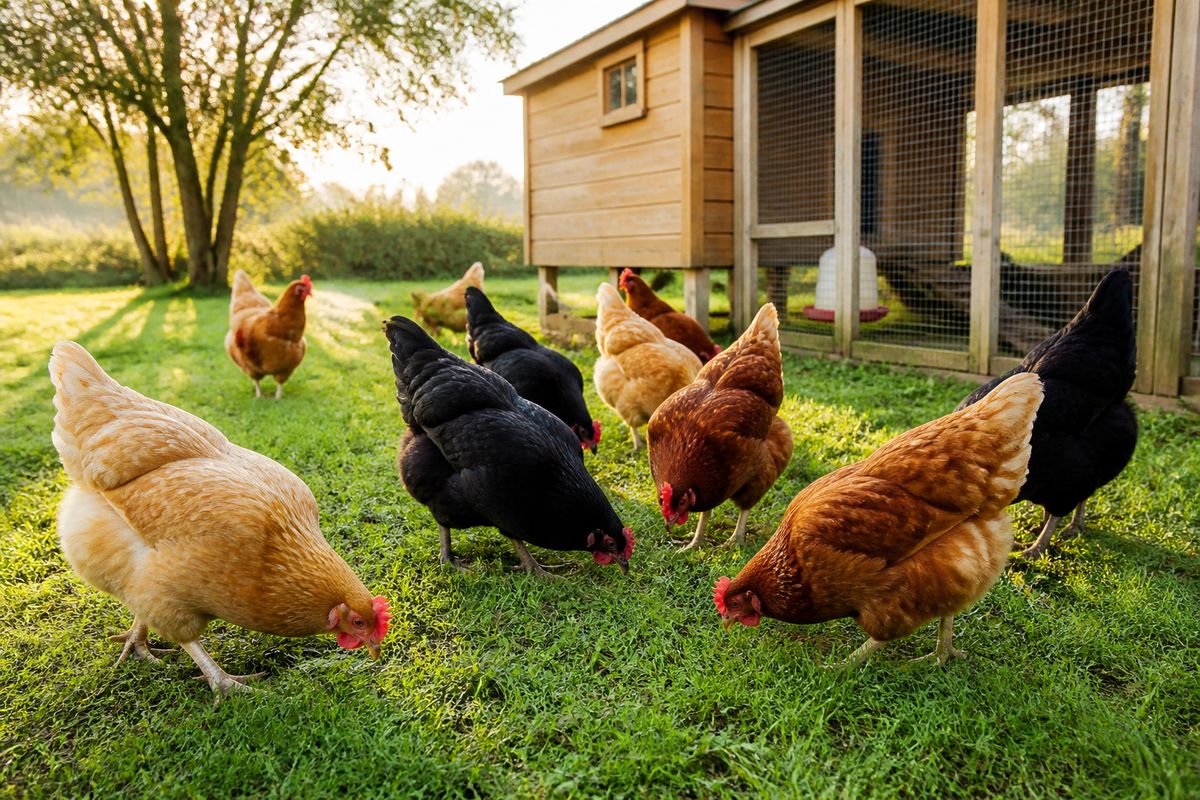
Backyard chickens are one of the most approachable homestead animals to start with — but "approachable" doesn't mean "figure it out as you go." Most of the mistakes new keepers make (overcrowded coops, chilled chicks, the wrong feed at the wrong age) happen because nobody told them the actual numbers ahead of time. Here they are, pulled from university extension research rather than forum guesswork.
Check your local rules before you buy anything
There's no single national law on backyard chickens — rules are set city by city and county by county, and sometimes by your HOA on top of that. Before you spend a dollar, check your municipal code for three things: the maximum number of hens allowed, whether roosters are banned (extremely common in residential zones, since it's almost always the crowing rather than the birds themselves that draws complaints), and any required setback distance from property lines or neighboring homes. A five-minute call to your city clerk's office will save you a much worse conversation later.
How many chickens should you start with?
Chickens are flock animals and genuinely do poorly kept alone, so most guidance recommends starting with at least three hens. Two is a workable minimum if that's your local cap, but three gives the flock more stability if you lose a bird to illness or a predator — you're not suddenly left with a single, stressed, isolated chicken.
How much space do chickens actually need?
Space requirements scale with the bird, not a flat number, and they matter more than most first-timers expect — cramped coops are a leading cause of feather-pecking, stress, and disease spread. As a baseline for standard-size laying breeds:
| Area | Minimum space per bird |
|---|---|
| Indoor coop | 3–4 sq ft |
| Outdoor run | 10 sq ft |
These are minimums, not ideals — more space is always better, especially in the run, and you should increase it further if your birds are largely confined (bad weather stretches, no free-ranging).
Starting with chicks or started pullets?
You have two real starting points:
- Day-old chicks are cheaper and let you handle and socialize them from day one, but you'll need a full brooder setup and roughly 5–6 months before your first egg.
- Started pullets (typically 8–20 weeks old) cost more upfront but skip the brooder stage entirely and reach laying age sooner — a solid choice if you're nervous about chick mortality or don't want to manage heat lamps.
If you start with chicks: the brooder temperature schedule
This is the single most common place new keepers go wrong — chicks that get chilled even briefly in the first couple of weeks can die. Keep the brooder floor (measured at chick height, not room height) at:
| Chick age | Brooder temperature |
|---|---|
| Week 1 | 90–95°F |
| Each following week | Decrease 5°F per week |
| Week 5–6 | Down to ambient room temp (~65–70°F); heat lamp can come off |
Watch the chicks' behavior as your real gauge: huddled tightly under the lamp means too cold, pressed to the edges of the brooder panting means too hot, and evenly spread out and active means you've got it right.
Feed changes by age — and one rule you can't skip
| Stage | Age | Protein |
|---|---|---|
| Starter | 0–6 weeks | 20–22% |
| Grower | 6–14 weeks | 16–18% |
| Layer | From first eggs (~18–20 weeks) | Lower protein, much higher calcium (3.0–4.2%) |
Predator-proofing, the part people underestimate
A determined raccoon, weasel, or hawk will find any weakness in a coop within its first few nights. The core rules:
- Use hardware cloth, not chicken wire — chicken wire keeps chickens in but does almost nothing to keep predators out. Use mesh with holes under 1 inch.
- Bury the bottom 12 inches of fencing and bend it outward, to stop animals from digging underneath.
- Cover runs overhead if hawks or owls are a risk in your area, and make sure doors and access panels latch securely — raccoons can operate simple hook latches.
When will you actually get eggs?
Most standard breeds begin laying between 18 and 24 weeks old, though it can stretch closer to six months depending on breed and season. Once they start, hens need roughly 12–14 hours of daylight a day to keep laying consistently, which is why production often naturally slows in winter unless supplemental light is added.
Keep track of it all in one place
Feed changes, brooder dates, laying start dates, and flock health notes are easy to remember for the first two weeks and impossible to remember by month three. The Chicken Flock Record Book gives you a printable system for exactly that, and the Backyard Chicken Keeping Guide ebook walks through the full first year in more depth.
Browse the shop →More Chickens & Poultry guides
Free tool: Chicken coop size calculator →
- Sources:
- eXtension Poultry — Space Allowances in Housing for Small and Backyard Poultry Flocks
- Penn State Extension — Space Should Increase as Birds Grow
- UNH Extension — Brooding and Caring for Chicks
- Alabama Extension — Nutrition for Backyard Chicken Flocks
- Oklahoma State Extension — Protecting Small Poultry Flocks from Predators
- University of Minnesota Extension — Raising Chickens for Eggs