
How to Start Raising Backyard Turkeys: A Beginner's Guide
Turkeys aren't just big chickens. They need more space at every age, a different feed program, and — this is the one rule that trips up almost every beginner coming from a chicken flock — they generally can't share ground with chickens at all.
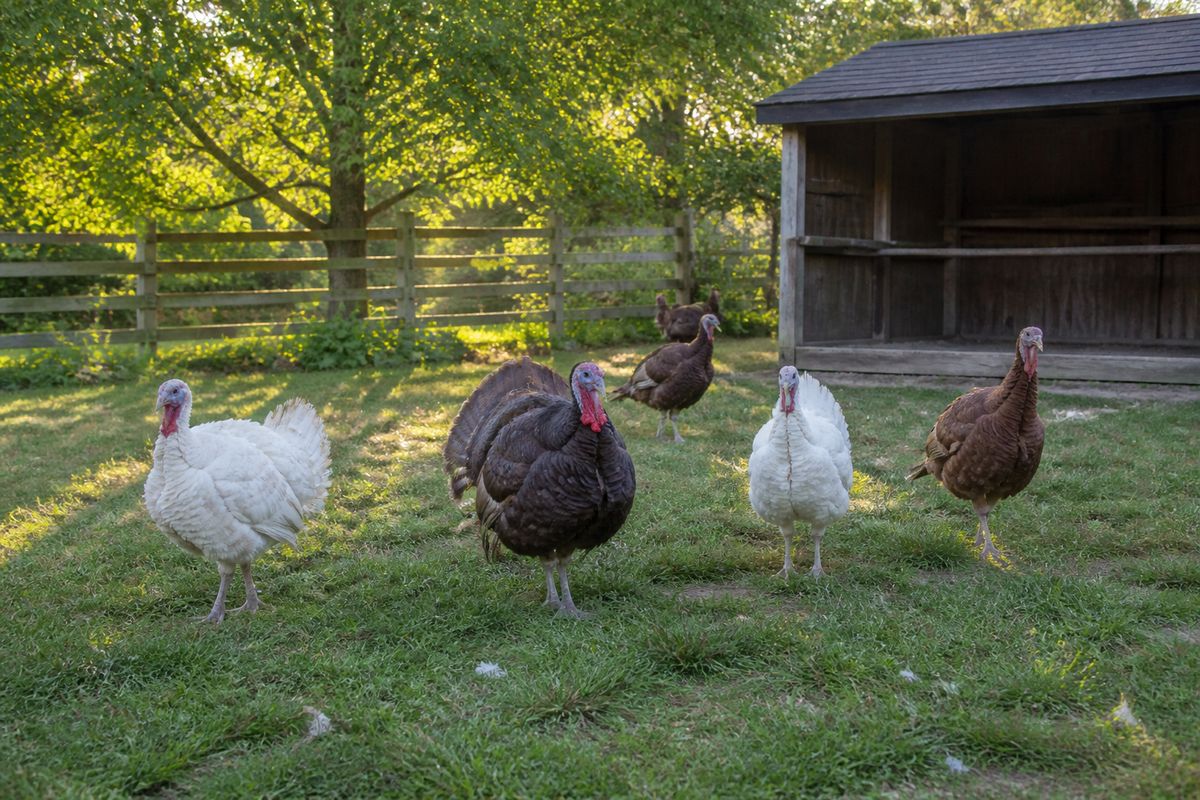
A turkey poult starts out needing the same basic brooder setup as a chick, but by the time it reaches market weight it will have eaten several times as much feed and needed several times the floor space. Extension programs treat turkeys as their own species with their own numbers, not a bigger version of a chicken program, and the gap matters most in three places: which type of bird you start with, how much space you budget as it grows, and whether you can safely keep it anywhere near an existing chicken flock.
Broad-breasted vs. heritage: choosing a type
The two options for a beginner aren't really "breeds" so much as two different kinds of bird bred for opposite goals:
| Broad-Breasted White | Heritage (Bourbon Red, Black, Slate, Royal Palm, Standard Bronze) | |
|---|---|---|
| Growth | Hens ~20 lb at 14 weeks; toms ~36 lb at 17 weeks | Reaches market weight in about 28 weeks — deliberately slower, allowing skeletal and organ development before muscle |
| Reproduction | Cannot mate naturally — requires artificial insemination for fertile eggs | Must reproduce by natural mating, with expected fertility of 70–80%, to qualify as heritage |
| Breeding lifespan | Not applicable (raised for meat only) | Hens commonly productive 5–7 years; toms 3–5 years |
| Best fit | Efficient meat production at the lowest feed cost | Foraging ability, hardiness outdoors, and keeping a self-sustaining flock |
The Livestock Conservancy's heritage-turkey standard exists specifically because commercial breeding pushed the Broad-Breasted White's chest muscle so far past its skeletal frame that it physically can't mate on its own — worth knowing if a beginner's plan includes breeding your own poults next year rather than buying them again each spring.
Space requirements, from brooder to pasture
Turkey space needs roughly double or triple over the course of a season, and extension guidance breaks it out by age rather than giving one number for "a turkey":
| Age / stage | Floor space per bird |
|---|---|
| 0–8 weeks (brooder) | 0.8–1.0 sq ft |
| 8–16 weeks (growing) | 1.5–2.0 sq ft |
| 16–20+ weeks, confined finishing housing | 2.0–2.5 sq ft, up to 3–5 sq ft |
| Adult, simple coop + outdoor range (past 2 months) | ~6 sq ft indoor, plus ~20 sq ft outdoor yard |
Feeder and waterer space scales the same way — roughly 0.5–1.0 linear inches of each per bird as poults, up to 2.0–3.0 inches of feeder and 1.0–1.5 inches of waterer space per bird by the time they're finishing out. An outdoor range setup is flagged by extension sources as the riskiest housing option specifically because it leaves birds exposed to predators and disease overnight — enclosed housing with a fenced daytime yard is the more conservative starting point for a first flock.
The brooder: temperature and the first 10 days
Poults are unable to regulate their own body temperature for roughly their first 10 days, which makes the brooder temperature schedule the single most failure-prone part of getting started:
- First two weeks: 95–98°F, measured 2–3 inches above the litter surface directly under the heat source.
- After day 10: reduce by about 5°F per week.
- By 6–8 weeks: down to 70°F, and supplemental heat is generally no longer needed.
Use clean, dry, absorbent litter such as pine wood shavings spread evenly — avoid sawdust, newspaper, and cedar shavings, all of which extension guidance flags as poor choices for poult brooders. Give poults water before feed when they first arrive, and make sure lighting is bright enough that they can actually find the feed and water — a surprising number of early poult losses come down to birds simply not locating their food source in the first day or two, not illness.
Feeding by age
Protein needs drop in stages as turkeys shift from building a skeletal frame to finishing out muscle and fat:
- Starter, 0–6/8 weeks: 28% protein, crumbles.
- Grower, continuing to about 10–12 weeks: 26% protein, crumbles or pellets.
- Finisher, 10–12 weeks to market: 16–22% protein, whole grain or pellets.
The one rule every beginner must know: never house turkeys with chickens
Turkeys and chickens can share a farm, but they generally can't share ground — this is a real disease risk, not a folklore caution. The culprit is histomoniasis ("blackhead disease"), caused by the protozoan parasite Histomonas meleagridis. Chickens are largely resistant carriers: they can host and shed the parasite with few symptoms of their own, quietly contaminating the ground turkeys will later use. Turkeys, by contrast, rank as the most susceptible species and can suffer high mortality once infected.
The parasite doesn't spread bird-to-bird directly — it travels inside the cecal roundworm (Heterakis gallinarum) and earthworms that pick up its eggs from contaminated soil. That's what makes this so easy for a beginner to walk into by accident: Heterakis eggs resist common disinfectants and can survive in soil for months to years, so even ground a chicken flock used the previous season can still carry risk for turkeys moved onto it later.
From your first poults to a full flock record
Once poults are through the brooder and out on range, keeping track of feed changes, weights, and health notes is what turns a first turkey season into a repeatable one next year. The Turkey Flock Record Book covers breed choice, housing, breeding, and growth logs in one printable planner.
Browse the shop →More Chickens & Poultry guides
Free tool: Chicken coop size calculator →
- Sources:
- Penn State Extension — Small-Flock Turkey Production
- University of Maine Cooperative Extension — Bulletin #2187, Turkey Brooding and Management
- UNH Extension — Raising Turkeys
- University of Guelph Animal Health Laboratory — The Threat of Histomoniasis: Turkeys and Chickens Cannot Be Housed Together
- The Livestock Conservancy — Heritage Turkey Definition