How to Start Raising Backyard Ducks: A Beginner's Guide
Ducks are easier than chickens in some ways and harder in others — the real differences are water, breed choice, and brooder temperature. Here are the actual numbers, from university poultry extension research.
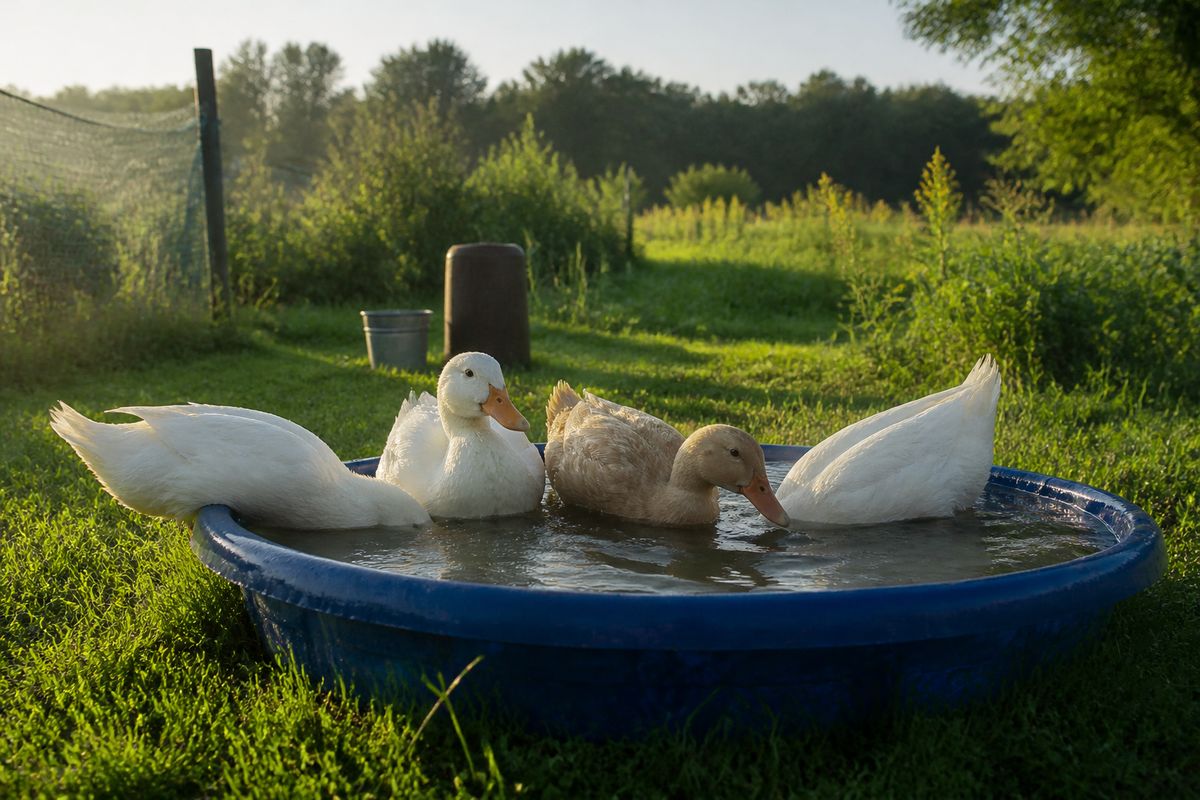
Ducks get pitched as the "easy" backyard bird — hardier, fewer health issues, less picky. That's mostly true, but the parts people underestimate are exactly the parts chickens don't prepare you for: ducks are far messier around water, need a warmer start as ducklings, and the "right" breed depends heavily on whether you want eggs, meat, or both. Here's what the research actually says before you order any ducklings.
How many ducks should you start with?
Like chickens, ducks are flock animals and shouldn't be kept alone — a solitary duck will call constantly and show clear stress. Most guidance recommends starting with at least two to three ducks, and buying an even number if you're not raising them for eggs, since ducks pair off. Unlike chickens, you generally don't need a fixed ratio of males to females for flock harmony — a small group of females alone does fine, and is the more common starter setup for a backyard egg flock.
Choosing a breed: eggs, meat, or both
Breed choice matters more for ducks than it does for a first flock of chickens, because the gap between an egg breed and a meat breed is bigger:
| Breed | Best for | Key traits |
|---|---|---|
| Khaki Campbell | Eggs | Extremely prolific layer, will lay through winter under lights; nervous/flighty and rarely goes broody |
| Welsh Harlequin | Eggs + meat (dual-purpose) | Prolific egg layer that also dresses out reasonably for meat; good forager |
| Runner | Eggs | Some utility strains top 300 eggs/year; stands upright, only females quack; rarely broody |
| Pekin | Meat | ~90% of U.S. duck meat is Pekin; reaches 6–7 lb in 7–8 weeks; gets harder to pluck cleanly after 10 weeks |
| Muscovy | Meat | Leanest duck meat; males 10–12 lb, females 5–6 lb; 35-day incubation vs. 28 for other breeds; butcher by 16 weeks |
If you just want a low-maintenance backyard egg flock, Khaki Campbell or Welsh Harlequin are the two most commonly recommended starter breeds. If meat is the goal, Pekin is the standard choice specifically because it grows fast and reaches a good weight quickly.
Housing and space — ducks need more room as they grow than you'd expect
Space requirements for ducklings ramp up fast in the first weeks, and the numbers are different from chickens':
| Age / class | Floor space per bird |
|---|---|
| Day 1 | ~0.31 sq ft |
| Week 1 | ~2.48 sq ft |
| Adult meat duck | At least 4 sq ft |
| Adult laying/breeder duck | ~3 sq ft (indoor) plus outdoor run |
Bedding should be at least 3–4 inches deep and changed weekly — more often if it's caking, since duck droppings run over 90% moisture and will foul bedding much faster than chicken droppings do. Ventilation matters for the same reason: small home flocks do fine with simple window and ridge ventilation, no fans needed, as long as air can actually move through.
Water: the single biggest way ducks differ from chickens
This is the part first-time keepers most often get wrong. Ducks don't need a swimming pool, but they do need water deep enough to fully submerge their bills and rinse their nostrils and eyes — extension guidance puts that at a minimum of about 4 cm (roughly 1.5 inches) of water depth at the drinking point. Skimping on this leads to crusted nostrils and eye irritation. Linear watering space (how much edge of a trough or waterer is available per bird) should be at least 1 inch per bird for growing ducks and 2 inches per bird for adult breeders, so a whole flock isn't waiting on one waterer.
Ducks also drink constantly while they eat, so feed and water stations should sit near each other — and expect the ground around both to get wet and messy. Planning for drainage (gravel, a raised platform, or a spot that isn't right next to the coop door) will save a lot of cleanup.
Brooder temperature for ducklings
Ducklings need a warmer start than chicks and cool down on a slightly different schedule. Keep the brooder floor (measured at duckling height) at:
| Duckling age | Brooder temperature |
|---|---|
| Day 1 | ~86°F (30°C) |
| Gradually through week 6 | Step down toward ambient |
| Week 6 and beyond | ~55°F — heat source no longer needed |
As with chicks, watch behavior as your real gauge — huddling means too cold, panting and avoiding the heat source means too hot. Keep drinking water in the brooder shallow enough that ducklings can't fully climb in and soak themselves before they're feathered; a wet, chilled duckling in a brooder is a real risk in the first two weeks.
Feed by age, and the one duck-specific nutrient to know
| Stage | Age | Protein |
|---|---|---|
| Starter | 0–2 weeks | 20–22% |
| Grower | 2–6 weeks | 16–18% |
| Finisher (meat birds) | 6–8 weeks | ~20% |
| Layer | From point of lay | ~16%, higher calcium |
Predator-proofing and when to expect eggs or a finished bird
Ducks are just as vulnerable to nighttime predators as chickens, and the same rules apply: secure housing with hardware cloth or wire mesh rather than open netting where a raccoon or weasel could reach through, and a latch that can't be worked open by clever paws. For meat breeds, Pekin reaches processing weight (6–7 lb) in as little as 7–8 weeks, though feed efficiency runs around 3 lb of feed per pound of weight gained, so budget feed costs accordingly. For egg breeds, expect first eggs somewhere around 5–7 months of age depending on breed and season, with the most prolific layers like Khaki Campbell continuing to lay through winter if you add supplemental light.
Keep your duck records in one place
Feed transitions, brooder dates, laying starts, and health notes are easy to lose track of once your flock grows. The Duck Flock Record Book gives you a printable system built specifically for ducks, with two pages of care-basics reference built in.
Browse the shop →More Chickens & Poultry guides
Free tool: Chicken coop size calculator →