Putting the Garden to Bed for Winter: A Beginner's Guide to Fall Cleanup, Cover Crops & Soil Testing
Once the first hard frost takes the last of the tomatoes and peppers, it's tempting to just walk away from the vegetable beds until spring. A half-day of cleanup now — done the right way, not just the fast way — is what actually keeps next year's disease pressure, weed load, and soil fertility from starting the season a step behind.
Already tracking your own frost dates and planting windows? See our frost dates & succession planting guide for the spring side of this same calendar.
Clear plant debris the right way, not just the fast way
Michigan State University (MSU) Extension's fall vegetable garden cleanup guidance starts before you pull a single plant: harvest any remaining usable fruit and pods from tomato, pepper, and bean plants first, and keep what's mature while composting what's immature or already rotten. Work on a dry, sunny day in late morning or afternoon — pulling plants when the foliage is wet can spread disease spores, and walking on wet soil compacts and damages its structure.
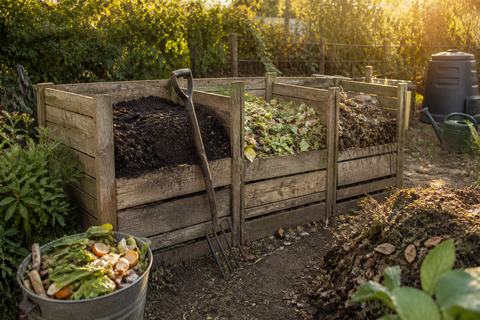
Once the fruit is off, remove entire plants, including the main roots and any fallen leaves underneath — those are exactly where overwintering disease and insect eggs hide. MSU draws a hard line here: tomato, potato, and pumpkin material that's severely infested or diseased (late blight on tomato fruit and potato tubers, in particular) should be bagged and sent to the trash, not the compost pile, since the fungal pathogens responsible can survive winter in plant debris and reinfect next year's crop. Healthy plant material composts fine. Cut large stalks with pruners before pulling so you're not wrestling whole root balls out of the bed.
What to do about mulch, stakes, and bare soil
Pull out stakes, cages, trellises, and plant labels, and rinse them off if they're caked in soil — MSU recommends checking now, while the bed is empty, rather than discovering a bent tomato cage next spring. Remove any inorganic mulch like black plastic: it doesn't break down, and it can shelter slugs and insect pests over winter instead of keeping them out.
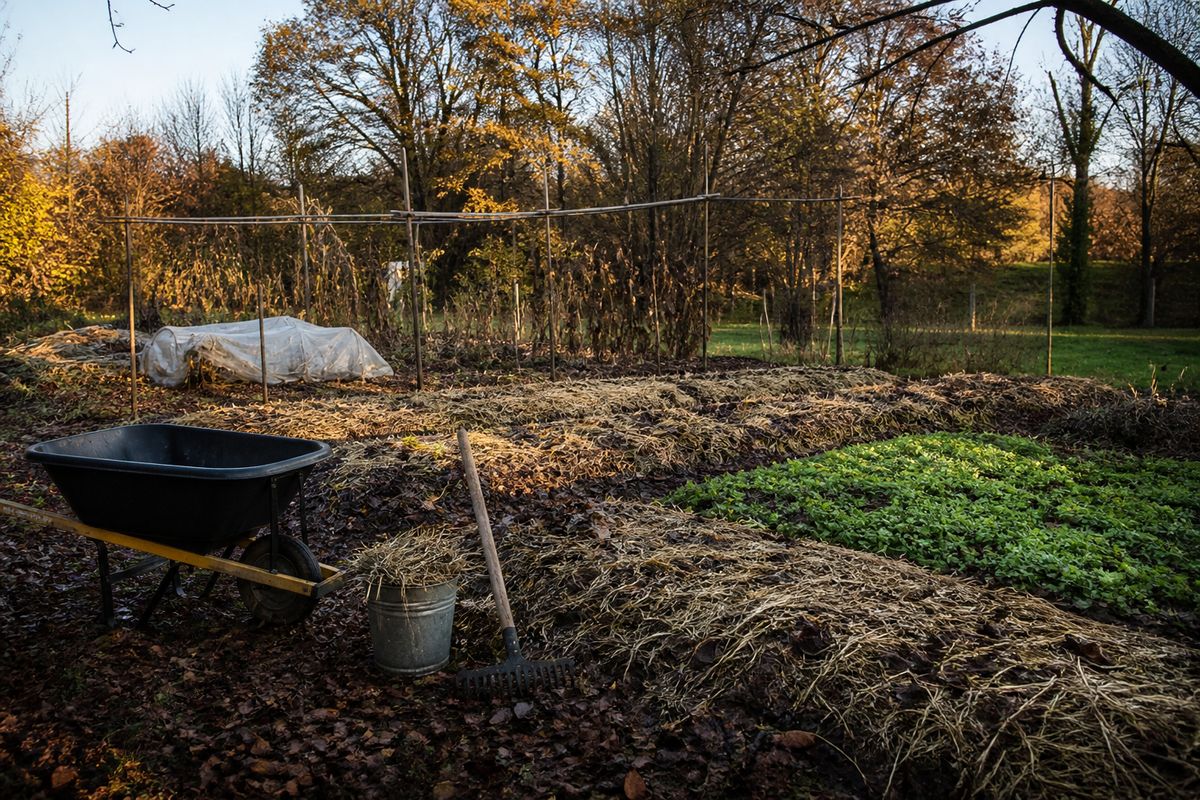
For what goes back on the bed, both MSU and University of Connecticut (UConn) Cooperative Extension Advisory System point to the same low-cost answer: shredded tree leaves or straw. MSU's guidance is to spread shredded leaves evenly over the cleaned beds and till them in to a shallow depth; UConn's is similarly simple — cover the bed with straw or leaves and either leave them on top through winter or work them into the soil before spring planting. A pass with the lawn mower to partly shred whole leaves first makes them break down faster and keeps them from matting into a soggy layer. One thing both sources are clear on: don't add lime or wood ash to garden beds without a soil test telling you that you actually need it.
A fall cover crop even first-timers can pull off
A bare bed all winter is a wasted opportunity, but cover crops intimidate a lot of beginners because the overwintering species need to be actively killed off in spring before they'll let you plant. Iowa State University Extension's cover crop guide solves that for a first attempt: pick a winter-kill species, and the cover crop dies on its own with no spring tilling, mowing, or herbicide step required.
| Category | Species | What that means for you |
|---|---|---|
| Winter-kill (dies on its own) | Oats, field peas, buckwheat, oilseed radish, winter barley, annual rye, yellow mustard, field turnip | No spring termination step — just rake off the dead residue or till it in |
| Survives winter (must be actively terminated) | Cereal rye, red clover, white clover, hairy vetch | Needs tilling, mowing, herbicide, or crimping 2–3 weeks before you plant in spring |
| Sometimes survives, depending on winter | Winter wheat, crimson clover, field turnip (mild winters) | Check it in spring before assuming it's gone |
For a first-time bed, Iowa State's own beginner list points to oats specifically: a short-term cover crop that's done its job and died back within 45–60 days of a late-summer or fall planting, with no spring follow-up needed. Seeding rate for oats, field peas, buckwheat, and winter barley runs 2–3 oz per 100 sq ft; oilseed radish, also winter-killed and good at breaking up compacted soil, runs lighter at 0.2–0.4 oz per 100 sq ft. If you do want a species that survives winter for a bigger nitrogen boost — hairy vetch is the standout for that — just know you're committing to a termination step in spring, and don't let it go to seed, since Iowa State notes its seed can stay viable in the soil for years.
Test your soil now, not in spring
Fall is genuinely a better time to soil test than spring, and not just because you have more time. UConn's guidance is direct about it: don't add fertilizer this time of year regardless of what the test says, but a standard nutrient test (UConn prices it at $15, and says most home gardeners only need this basic test) reads out potassium, phosphorus, pH, and organic matter, with amendment recommendations attached. Fall samples also get a faster lab turnaround than the spring rush, so you'll actually have the results — and time to act on them — before planting season.
If the test calls for lime to raise pH, UConn notes you can apply it any time the ground isn't frozen, but it's slow-acting: expect the pH change to take 6 to 18 months to fully show up, which is exactly why a fall application beats waiting until spring and hoping. Collect several random core samples across each bed (not just one spot) and send them to your local Cooperative Extension soil lab — your county extension office can tell you where that is and what it costs if you haven't tested before.
Clean and store your tools before you forget
MSU's cleanup guidance ends where most gardeners' motivation runs out, but it's worth the extra fifteen minutes: clean shovels and hoes under running water and dry them with a cloth, scrub any rusty edges with coarse steel wool, wipe metal surfaces with 70% rubbing alcohol, and finish with a light spray of WD-40 to keep rust from forming over winter. UConn adds the rest of the yard to the list — drain hoses and watering cans before they freeze and split, bring fragile cement ornaments and birdbaths in out of the weather, and dig up tender bulbs like dahlias and gladioli to store indoors if you grow them alongside the vegetable beds. Store everything in a dry shed or garage, and make a quick note of anything that needs repair or replacement before next season.
The short version
Harvest what's left, pull the whole plant (roots included), and trash — don't compost — anything that was visibly diseased. Cover bare soil with shredded leaves or straw, or seed a winter-kill cover crop like oats if you want the soil benefit without a spring termination chore. Soil test now while the lab lines are shorter and you have months to act on the results. None of it takes long, and all of it is the difference between starting next spring from a clean, tested bed instead of guessing again.
Plan next year's beds while this year's are still fresh in mind
This article covers the fall teardown; the Homestead Garden Master Planner is a 53-page operational system with a frost date calculator, bed layout templates, a seed inventory tracker, and a pest & disease field guide — everything you need to plan what goes into these beds come spring. Keep every harvest logged with the Canning Inventory & Pantry Log, and see our winterizing the homestead guide for the animals, pipes, and power side of getting ready for cold weather.
Browse the shop →