Rainwater Harvesting for the Garden: A Beginner's Guide
A single rainstorm drops more water on an average roof than most gardens need for weeks — the trick is catching it, keeping it clean enough for a food garden, and knowing the rules before you build anything permanent.
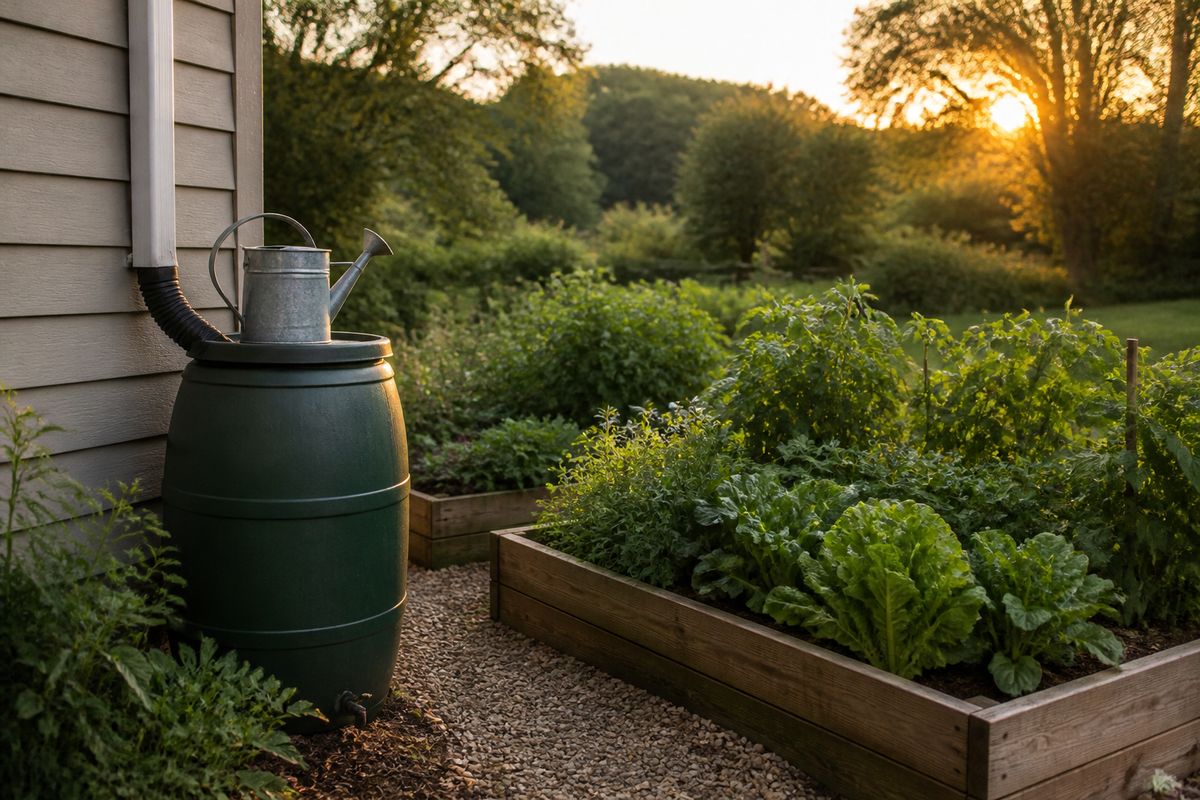
Rainwater harvesting for garden irrigation is simpler than harvesting it for drinking water, but it still has real engineering behind it: how much a given roof actually yields, why the first few gallons of any storm need to be thrown away, and what you can and can't safely do with the water once it's stored. This guide covers the garden-irrigation basics, drawn from EPA and university extension research.
Is it even legal where you live?
The EPA's Green Infrastructure Municipal Handbook on rainwater harvesting notes that most U.S. jurisdictions have no specific rainwater harvesting code at all — neither the Uniform Plumbing Code nor the International Plumbing Code directly addresses it, which is actually why rules vary so much from place to place. In most of the country, catching roof runoff in a barrel or cistern for garden use is simply unregulated. The exceptions are worth knowing: a handful of Western states follow "prior appropriation" water-rights law, which treats rain as already belonging to someone downstream before it ever reaches your roof — Colorado currently prohibits rainwater collection under this interpretation, while other states in the region have passed specific legislation to clear up the ambiguity. Texas, by contrast, explicitly permits harvested rainwater for any use with appropriate treatment. The practical takeaway: a simple rain barrel for garden watering is fine almost everywhere, but it's worth a quick check with your local or state water authority before installing anything larger or more permanent.
How much water your roof can actually collect
Purdue Extension's rainwater harvesting guidance (WQ-40) gives a straightforward formula for estimating yield:
The 0.62 figure converts the roof-area/rainfall math to gallons; the 0.85 factor accounts for evaporation and system losses, knocking off roughly 15% of the theoretical total.
Run the numbers on an average home: a 1,500 sq ft roof catching a 1-inch rainfall works out to roughly 790 gallons — from a single storm. Even a modest roof section feeding one or two rain barrels adds up fast over a season.
Why the first flush of every storm gets thrown away
The first few minutes of runoff carry whatever settled on the roof since the last rain — dust, pollen, bird droppings, roofing grit. Purdue Extension recommends sizing a first-flush diverter to capture about 10 gallons of initial runoff for every 1,000 sq ft of catchment area, using a float mechanism that rises as the diversion chamber fills and then routes the rest of the storm into the main storage. A slow-release valve or small orifice at the bottom empties the chamber between storms so it's ready to catch the next first flush automatically.
Gutters, screens, and keeping debris out
Before water ever reaches a diverter or tank, Purdue's guidance recommends layering simple physical filtration: screens or guards on top of the gutters, mesh where the downspout connects to the cistern, and leaf catchers inline. If a downspout connects directly into a cistern, add a relief valve to stabilize pressure. Positioning the whole system near the garden it's meant to serve — rather than routing water a long way — keeps pressure loss down and makes hand-watering more practical day to day.
Choosing a storage tank that won't contaminate the water
Not every container is safe for catching water meant for a food garden. Purdue Extension's material guidance:
| Use these | Avoid these |
|---|---|
| Food-grade plastic, metal, clay tile, concrete tile | Bare copper |
| Untreated/galvanized metal | |
| Treated wood | |
| Anything with lead-based paint |
A standard rain barrel holds about 55 gallons; larger cisterns run anywhere from 50 to 1,000+ gallons depending on how much water your garden actually needs between storms. A dark or fully covered tank matters more than most people expect — blocking sunlight is what keeps algae from taking over a tank of standing water over a full season.
Using harvested rainwater safely on food crops
Purdue's food-safety guidance for garden use is specific, and worth following closely if any of the water will touch vegetables you plan to eat:
- Water the base of the plant with drip irrigation rather than spraying foliage.
- Water in the early morning so leaf surfaces dry quickly — sunlight speeds up the breakdown of both plant and human pathogens on wet leaves.
- For low-growing crops like leafy greens, a biodegradable plastic barrier over the drip line keeps splashed water off the edible part of the plant.
- Maximize the time between the last irrigation and harvest.
- When hand-watering, aim for the soil, never the harvestable part of the plant.
- Wash all produce before eating it — and never wash produce with the harvested rainwater itself.
- For leafy greens and herbs especially, Purdue suggests considering potable tap water instead of harvested rainwater, given how little processing those crops get before eating.
Start with one barrel
A single 55-gallon rain barrel under one downspout, with a basic screen and an overflow hose routed to the garden, is enough to see how much a modest roof section actually yields in your climate before investing in a larger cistern, pump, or distribution system.
Ready to take it from garden water to drinking water?
If you want to go beyond garden irrigation and build a full system — gutters, first-flush diverter, a sand-and-carbon biosand filter, and real disinfection — the RAINCROFT Rainwater Harvesting & Filtration Guide walks through the complete DIY build, roof to tap.
Browse the shop →