How to Label Your Pantry & Canning Jars: Dates, Shelf Life & Rotation Explained
Most of the dates printed on food aren't safety dates at all — and most home canners never write a date on the jar in the first place. Both habits are easy to fix once you know what the labels are actually for.
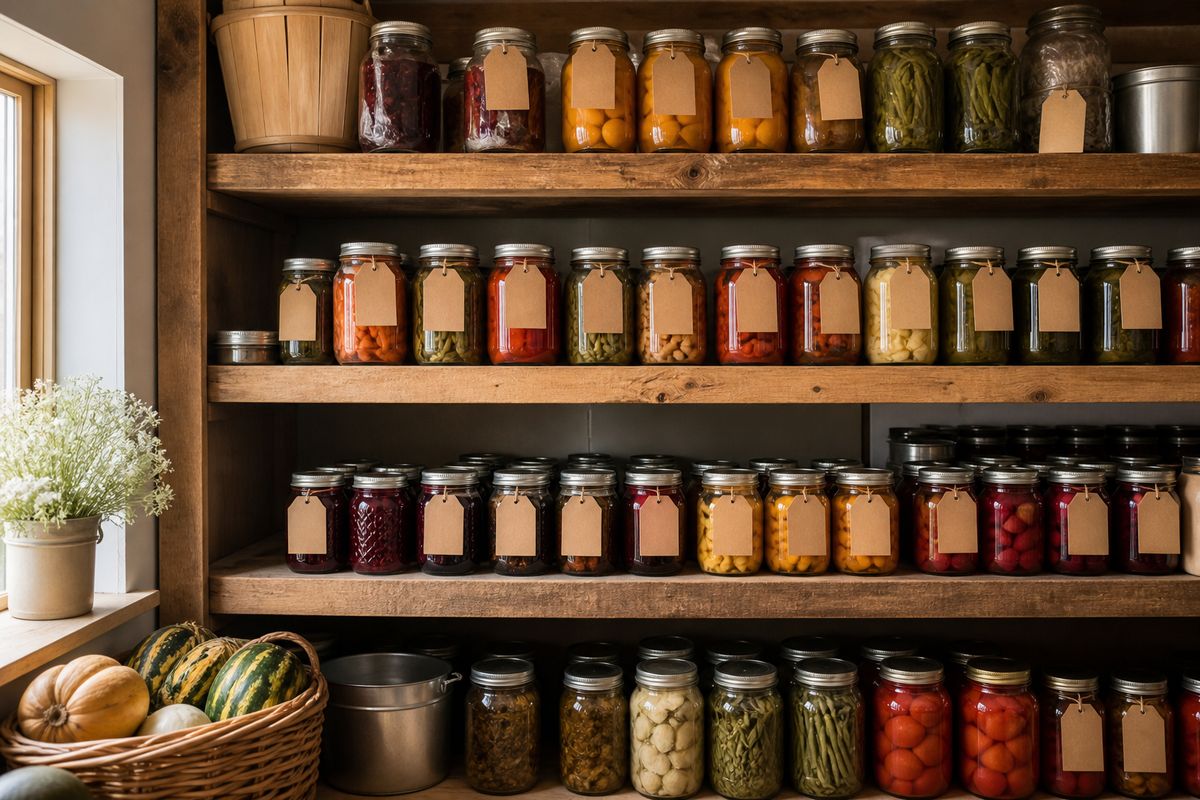
If you haven't canned before, start with our home canning guide — this article picks up after the jars are sealed and shelved.
"Expiration date" doesn't mean what most people think
Texas A&M AgriLife Extension's food-storage guidance breaks down the four kinds of dates actually printed on packaged food, and they mean genuinely different things:
- Expiration date: the last day the food should be eaten — discard after this date (eggs are the one common exception, which often stay safe past theirs).
- Best if used by: a peak-quality date, not a safety date. The food may still be fine afterward if it's been stored properly and shows no signs of spoilage.
- Sell by: a date for the store's own inventory management, not the shopper.
- Pack date: when the food was packaged — useful for judging real age even when no other date is printed.
Utah State University Extension adds an important caveat: there's no federal standard requiring any of these labels, which is exactly why "is this safe?" and "is this just past its best?" get confused so often.
Home-canned jars play by different rules than store cans
Penn State Extension is direct about this: a home-canned jar processed with a tested, up-to-date recipe stays safe indefinitely as long as the seal is intact — but quality (firmness, color, flavor) declines well before that. Their practical guidance: plan to can only what you'll realistically eat within about a year, and treat anything older as a quality call, not a safety one, provided the seal has held.
What to actually put on the label
At minimum: the canning date and what's in the jar. Both extensions' guidance agrees on dating anything that doesn't have an obvious, printed date already (this applies to freezer containers and leftovers too, not just canning jars) — a jar of green beans looks like every other jar of green beans a year later, and "I'll remember" rarely survives past the second shelf.
FIFO: first in, first out
Both Penn State and USU Extension point to the same simple system for keeping a pantry or freezer from quietly accumulating forgotten jars: new goes to the back, older moves to the front, and the oldest or shortest-dated items get used first. Penn State specifically recommends an annual inventory pass — go through the shelves once a year, move anything old to the front, and pull anything that's spoiled or discolored enough that you genuinely won't eat it.
Real storage times, not guesses
Texas A&M AgriLife's canned-goods storage chart gives concrete numbers worth having on the pantry wall rather than memorizing:
| Food | Unopened | After opening |
|---|---|---|
| Canned vegetables | 1 year | — |
| Canned fruit | 12 months | 1 week (in a covered glass/plastic container, not the can) |
| Canned fish or shellfish | 12 months | 1 day |
| Canned juice | — | 6 days, tightly covered |
| Shelf-stable canned ham | 2 years | Refrigerate immediately |
| Canned baby food | 1 year | 2 days |
For dry pantry goods generally, both extensions recommend 50–70°F, dry, dark storage, off the floor and away from the stove, dishwasher, or water heater — humidity above 60% can cause caking and staleness even in sealed packaging.
When to actually toss it
Discard any can or jar that's swollen, badly dented (especially along a seam), rusted, or leaking — no date math needed at that point. For home-canned jars specifically, a broken seal, visible mold, cloudy liquid, or an off smell on opening means the jar goes in the trash, not the taste test, regardless of how recently it was canned.
Labels and a log, so the system actually sticks
A good label does half the work above automatically — our Fall Pantry Labels set includes pre-filled spice, baking, and preserve labels plus blank date-line labels for whatever you can or dry yourself. Pair it with the Canning Inventory & Pantry Log to track what's on the shelf at a glance, or go deeper with The Homestead Canning Book for the recipes to fill those jars in the first place.
Browse the shop →