Smoking & Curing Meat at Home: A Beginner's Guide to Safe Ham, Bacon & Sausage
Smoke adds flavor. It's the cure — salt, sugar, and a precisely dosed amount of nitrite — that actually makes home-preserved meat safe to eat. Mix those two up, and a beginner can end up with something that tastes smoky but was never actually preserved at all.
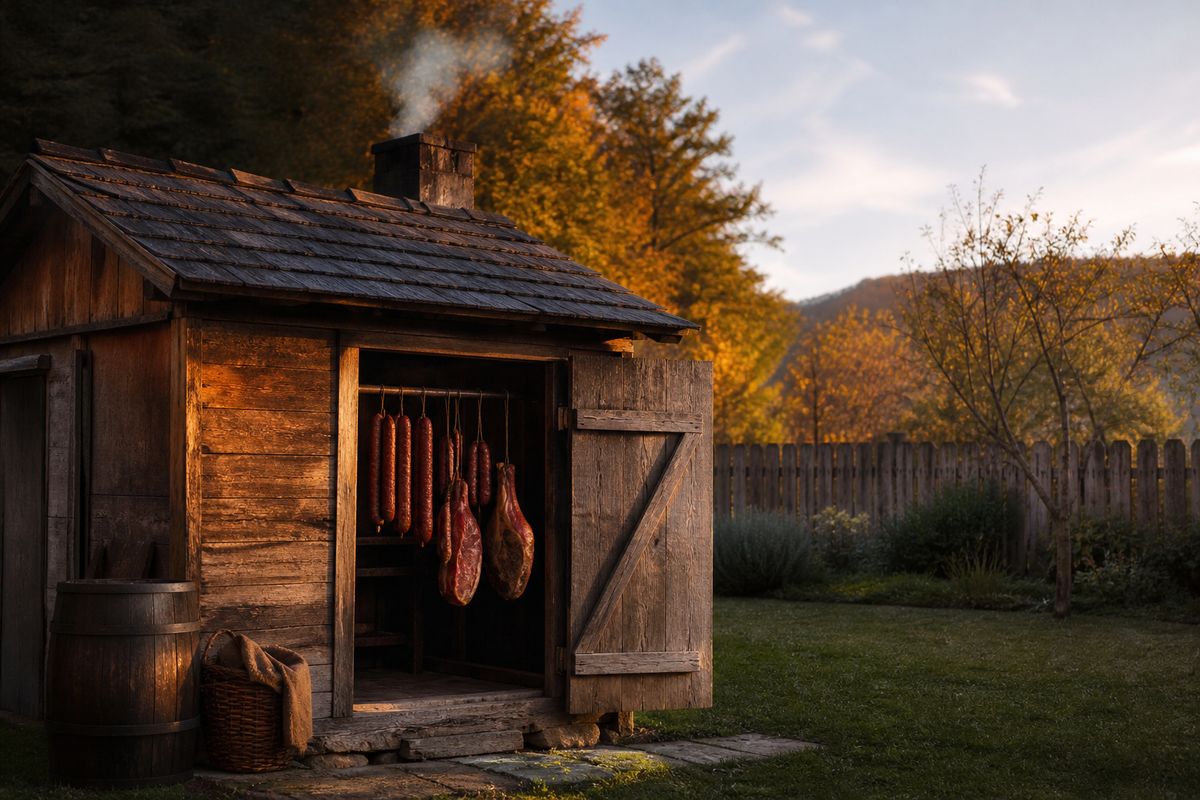
Home curing and smoking is one of the oldest ways to keep meat edible for months without refrigeration, and it's still entirely doable in a backyard smokehouse. But it's also the one homestead food-preservation skill where guessing at a step — skipping the cure, eyeballing the nitrite, or jumping straight to cold smoking — has real consequences. Here's what the actual science says, before you start.
What curing actually does
Curing uses salt and sugar, plus a curing agent (sodium nitrite, sometimes sodium nitrate for longer cures), to pull moisture out of the meat and create an environment hostile to spoilage organisms — most importantly Clostridium botulinum, the bacterium behind botulism, which thrives in exactly the low-oxygen, low-temperature conditions a sealed, smoked piece of meat provides. The salt and sugar add flavor and help with moisture loss; the nitrite is what specifically blocks botulism.
A standard dry-cure mix, and how long curing actually takes
Mississippi State University Extension publishes a standard dry-cure formula for home use: 8 lb salt, 3 lb sugar, 2 oz sodium nitrate, and ½ oz sodium nitrite, applied at a rate of 1 ounce of that mix per pound of meat for cuts under 20 lb, or 1.5 oz per pound for heavier cuts like a whole ham. One exception worth knowing: USDA does not allow sodium nitrate in bacon, so a bacon cure uses only sodium nitrite, at half the rate used for ham.
Cure in the refrigerator, at 32–40°F — never at room temperature. Curing time scales with thickness, not weight:
| Cut thickness | Dry-cure time |
|---|---|
| 1 inch | About 7 days |
| 3 inches | About 21 days |
| 5 inches (a whole ham) | About 35 days |
Mississippi State's rule of thumb is 7 days per inch of thickness at the thickest point. For smaller cuts, a shorter 2–3 week cure followed by freezing is workable, though it produces a less thoroughly cured result than running the full time.
Hot smoking vs. cold smoking — and why beginners should start with hot
These are genuinely different processes, not two speeds of the same thing.
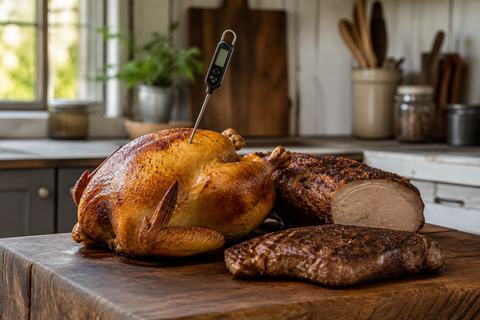
Hot smoking is really smoke-cooking: USDA's backyard-smoker guidance calls for holding the smoker or grill's air temperature between 225–300°F throughout, until the meat itself reaches a safe internal temperature — 145°F for whole-muscle beef, pork, lamb, or veal, 160°F for ground meat, 165°F for poultry. The meat comes out fully cooked, the same way roasting or grilling would cook it; the smoke is flavor, not the preservation mechanism. This is the right starting point for anyone new to smoking, because a thermometer and a known safe internal temperature are all you need to know it's done right.
Cold smoking is a different animal: temperatures stay below 100°F, often held around 70–80°F, for 1 to 5 days. The meat is never cooked by the heat at all — it just absorbs smoke flavor slowly while sitting in a temperature range bacteria can still grow in. That's exactly why cold smoking is only safe on meat that has already been fully cured first. Skip or shortcut the cure, then cold smoke it for days at 70–80°F, and there's nothing stopping the exact spoilage organisms curing exists to control.
Three rules that keep home-cured and -smoked meat safe
Straight from USDA's food-safety guidance for backyard smoking:
- Never thaw meat in the smoker. It takes too long, and the meat lingers in the 40–140°F "danger zone" the whole time. Thaw fully in the refrigerator first.
- Never partially smoke or cook meat to finish later. Partial heat lets surviving bacteria multiply to a level that a later round of cooking or smoking can no longer bring back down to safe.
- Go by temperature, not time. Use a food thermometer in the meat itself, and a separate thermometer to monitor the smoker's air temperature — "it smoked for X hours" tells you nothing about whether it actually reached a safe internal temperature.
One more pork-specific note: fresh pork can carry Trichinella parasites. A proper cure followed by the cooking or hot-smoking temperatures above handles this as a matter of course — it's one more reason not to shortcut either step.
Ready to build your own smokehouse?
Full construction plans — firebox, smoke chamber, and airflow design — are in the shop: the Homestead Smokehouse Build Guide. Raising your own hogs for the smokehouse? See How to Raise Pigs for Meat at Home, and track litters, feed, and processing with the Pig & Hog Record Book.
Browse the shop →