Fermented Pickles vs. Quick Pickles: A Beginner's Guide to Salt, Crunch & Safety
Both call themselves pickles, but a fermented pickle and a quick (vinegar) pickle get their sourness from two completely different processes — and each one fails in its own particular way when something goes wrong. Here's what actually separates them, and the fixes for the problems that turn a crock or a jar soft, hollow, or dark.
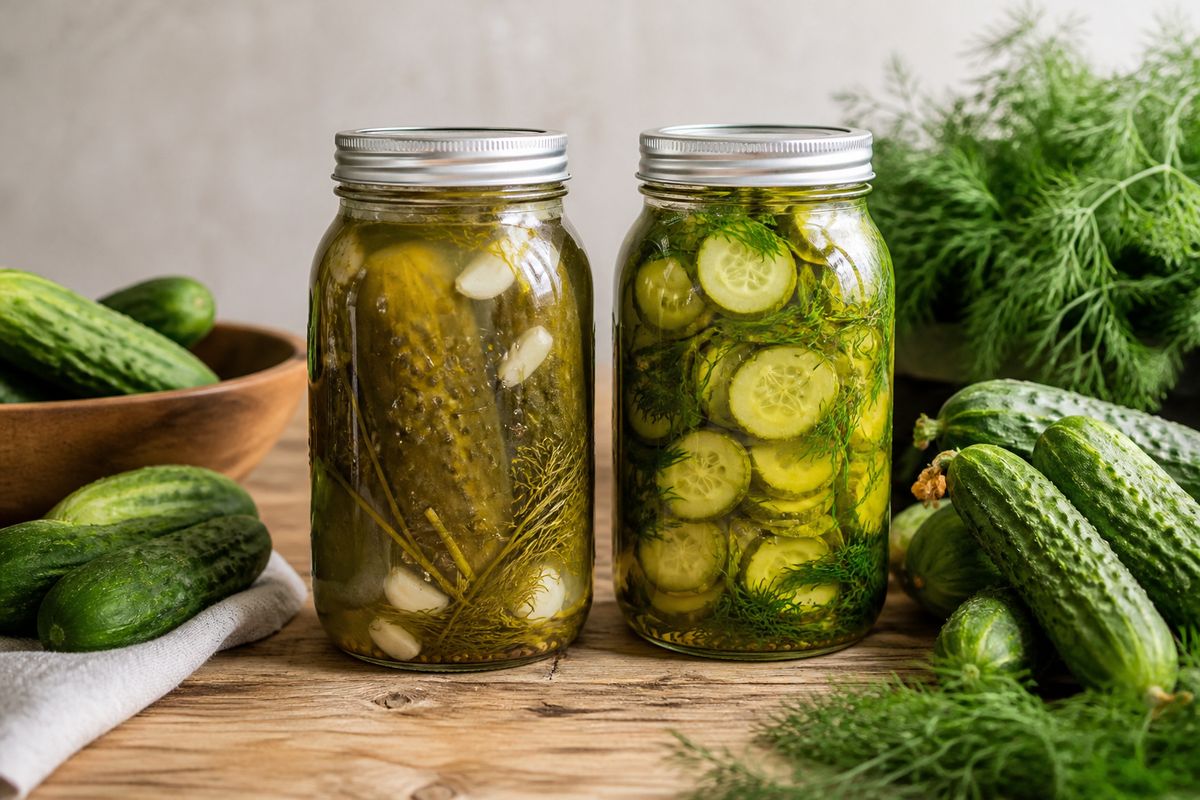
Already decided to ferment, or already sold on vinegar? Our fermenting vegetables at home guide covers the step-by-step crock process, and jam & pickle ratios covers the exact brine math for both. This article is for the "which one, and why did mine go wrong" question.
Two different chemistries, one word
A fermented pickle doesn't get its acid from a bottle. Cucumbers go into a salt brine, and the lactic acid bacteria already living on their skins convert natural sugars into lactic acid over several weeks — the brine's own salt concentration is what controls which bacteria get to do the work. The National Center for Home Food Preservation (NCHFP) and New Mexico State University (NMSU) Extension both describe a 3–4 week cure at 70–75°F for a standard fermented dill pickle; cooler rooms (55–65°F) just take longer to develop flavor.
A quick (fresh-pack) pickle never ferments at all. NMSU's process is a short salt soak — ¾ cup salt dissolved in 2 gallons of water, with cucumbers standing in it for 12 hours — followed by packing the jars and covering them with a hot pickling solution built from 5% vinegar (roughly 3 parts vinegar to 4 parts water), salt, and sugar. The jars are then heat-processed in a boiling-water canner. There's no bacterial culture doing anything here; the vinegar itself supplies all the acid, on day one.
Side by side
| Factor | Fermented | Quick/fresh-pack |
|---|---|---|
| Acid source | Lactic acid bacteria (self-produced) | Added 5% vinegar |
| Time before it's a pickle | 3–4 weeks in brine | Ready right after processing; best flavor after 4–5 weeks in the jar (NMSU) |
| Needs a specific room temp? | Yes — 70–75°F while fermenting | No — normal kitchen prep |
| Heat processing | Not part of the ferment itself | Required: boiling-water canner, 10 min pints / 15 min quarts (0–1,000 ft) |
| Equipment | Crock or jar, a weight to keep cucumbers submerged | Boiling-water canner, jars, lids |
What actually makes a fermented pickle go wrong
NCHFP's own troubleshooting guidance covers four specific failure modes, each with its own cause — crunch problems are rarely random:
- Soft or slippery pickles: caused by a brine that's weaker than the recipe calls for, storing the ferment above the ideal temperature (NCHFP notes 80°F or above can soften pickles outright), cucumbers that float above the brine line, moldy garlic or spices, or blossom ends left on. Keep the recipe's exact salt concentration, ferment at 70–75°F, keep every piece submerged, use fresh spices, and slice at least 1/16 inch off the blossom end before brining.
- Hollow pickles: usually oversized cucumbers, a brine that's too weak, or a delay of more than 24 hours between harvest and brining. Use smaller cucumbers and start fermenting within a day of picking. Hollow cucumbers tend to float during washing and are still fine for relish.
- Shriveled pickles: a brine, syrup, or vinegar that's too strong, overcooking, or that same harvest-to-brine delay. Follow the recipe's salt and sugar amounts exactly and don't substitute a "stronger is safer" brine.
- Dark or discolored pickles: hard water minerals, ground (rather than whole) spices, spices left sitting in the jar, iodized table salt, or brass/iron/copper/zinc utensils and equipment. Use soft water, pickling or canning salt, whole spices in a cheesecloth bag, and only glass, stainless steel, or food-grade enamelware. NCHFP is explicit: if brass, copper, or zinc equipment touched the batch, don't eat the pickles.
A thin white film on top of the brine (often called kahm yeast) is its own, less alarming case: NCHFP attributes it to wild yeasts and bacteria feeding on the brine's acid, which can weaken it if left alone. The fix is simply to skim it off as often as it appears, not to toss the batch on sight.
What actually makes a quick pickle go wrong
A fresh-pack pickle fails for a shorter, more vinegar-specific list of reasons: shriveling from a brine or vinegar solution that's too strong, from overcooking or overprocessing, or from more than a 24-hour delay between harvest and salting; softness from under-processing or from using vinegar below 5% acidity; dark color from the same hard-water, metal-utensil, and iodized-salt causes as the fermented version; and a harsh, bitter taste from salt substitutes like potassium chloride or from over-spicing. The fix in every case is the same: follow a tested recipe's exact vinegar strength (5%), salt amount, and processing time rather than adjusting any of them by feel.
So which should you actually make
If you don't want to run a canner, can keep a corner of the kitchen at a steady 70–75°F, and don't mind checking a crock for a few weeks, fermenting is the lower-equipment, more traditional route — and it's the one that rewards patience with genuinely different flavor, not just sourness. If you want jars that are shelf-stable on a known date, don't have a spot that holds a stable fermenting temperature, or are putting up a big one-day harvest, the quick-pack-and-process method gets you there faster with fewer variables to watch. Plenty of homesteads do both, choosing crop by crop rather than committing to one method for every cucumber that comes off the vine.
The short version
A fermented pickle makes its own acid over 3–4 weeks at 70–75°F and fails mostly from the wrong temperature, a weak brine, or an uncovered cucumber; a quick pickle gets all its acid from 5% vinegar on day one and fails mostly from an off-strength brine or a harvest-to-jar delay. Neither method is more "correct" than the other — they're just solving the sourness problem with different tools, and each one has its own short list of things to get right.
A printable reference for whichever jar you're troubleshooting
The Fermentation Chart puts the salt-ratio and troubleshooting rundown above on your kitchen wall for the next batch, and the Jam & Pickle Ratios Chart covers the exact brine math for the quick-pack side. Going deeper into fermenting a full batch? The Fermenting Book (kimchi, sauerkraut, pickles, and kombucha recipes) walks through the whole process start to finish.
Browse the shop →