Root Cellar Storage for Beginners: How to Keep Your Harvest All Winter
Canning preserves food by heat; root cellaring preserves it by keeping produce alive and dormant at the right temperature and humidity. It's the older, simpler method for the crops it works best for — and most beginners get the humidity part backwards.
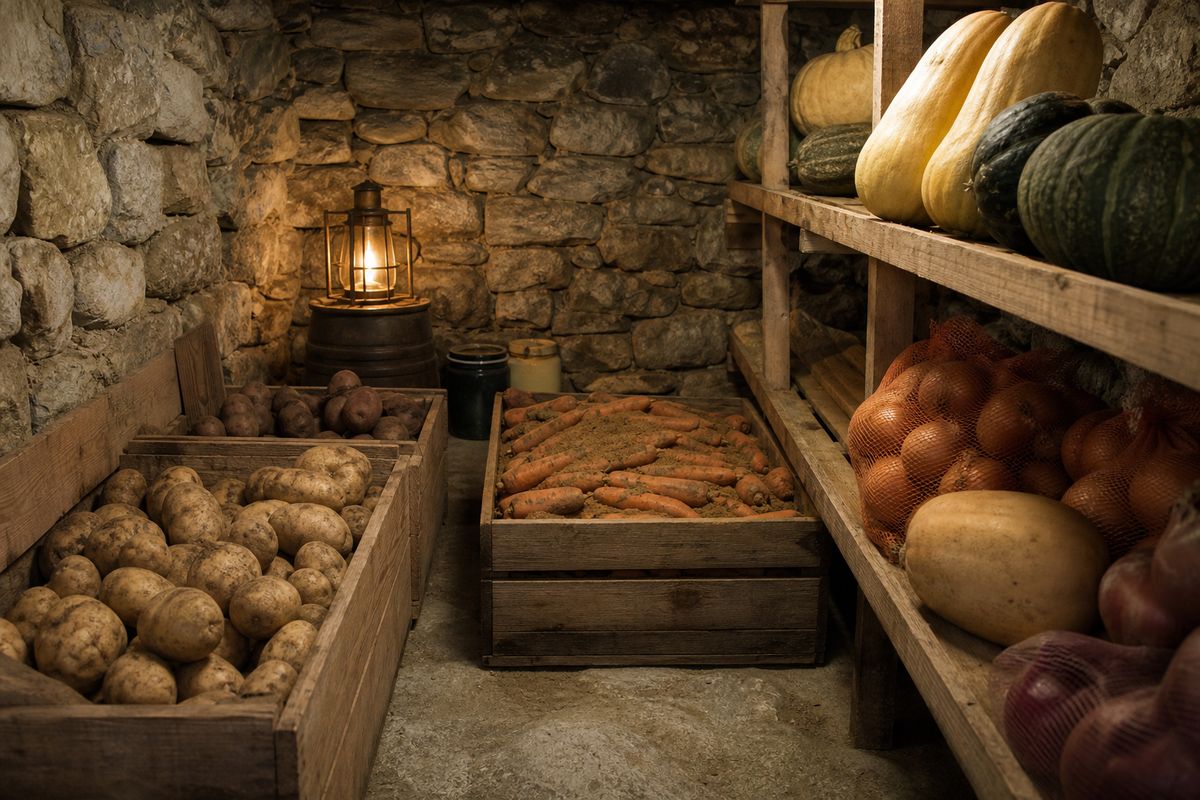
Not every vegetable wants the same storage conditions, and that's the single biggest thing beginners get wrong: a cellar that's perfect for potatoes will slowly wither carrots and shrivel cabbage, because those crops need much higher humidity. University extension guidance breaks storage crops into a handful of temperature/humidity groups — matching your crop to its group, not just finding "somewhere cold," is what actually makes produce last months instead of weeks.
The storage zones, and what goes in each one
Iowa State University Extension groups winter storage crops into distinct temperature/humidity zones:
| Zone | Conditions | Crops |
|---|---|---|
| Cold & very humid | 32–35°F, 95–100% humidity | Carrots, parsnips, celeriac, horseradish |
| Cold & moderately humid | 32–40°F, 65–95% humidity | Onions, garlic, beets, rutabagas, turnips |
| Cool & humid | ~40°F, 90–95% humidity | Potatoes (after curing) |
| Moderate & dry | 50–55°F, dry | Winter squash (after curing) |
| Warm & humid | 55–60°F, 85–90% humidity | Sweet potatoes (after curing) |
Notice that onions and garlic want dry conditions while carrots and beets want the opposite — humid enough to feel almost wet. That's why a single-zone cellar (say, everything packed into one damp corner) always shortchanges something: the onions rot from excess moisture, or the carrots go limp and rubbery from too little.
Curing: the step most beginners skip
Several crops need a deliberate curing period before long-term storage — skip it, and they'll rot far sooner than the numbers below suggest:
- Potatoes: hold at 50–60°F, 85–90% humidity for about two weeks. This heals harvest wounds and thickens the skin before cold storage.
- Onions and garlic: dry in a warm, well-ventilated spot for two to four weeks, until the tops and necks are thoroughly dry and papery.
- Winter squash: cure at 80–85°F, 80–85% humidity for about a week (acorn squash is the exception — skip curing and go straight to cool/dry storage).
- Sweet potatoes: cure at 85°F, 80–90% humidity for 10–14 days, or air-dry in a warm, shaded spot if you can't hold that temperature.
How long common crops actually keep
| Crop | Typical storage life |
|---|---|
| Potatoes | 5–8 months |
| Onions | 4–8 months |
| Garlic | 6–7 months |
| Carrots | 4–8 months |
| Beets | 5 months |
| Cabbage | 5 months |
| Winter squash | 2–8 months (variety dependent) |
University of Minnesota Extension notes the temperature sensitivity is steep: storage life can drop by roughly 25% for every 10°F the storage space runs warmer than target — a cellar that drifts from 40°F up to 55°F over a mild winter isn't a minor miss, it's a real cut into how long that harvest actually lasts.
No cellar yet? Where to start
You don't need a dedicated underground room to get started. The Maine Organic Farmers and Gardeners Association points to the coldest usable spot in an existing basement — commonly the north or northeast corner, farthest from a furnace or boiler — as a workable first root cellar, sometimes with nothing more than a bulkhead entry for outside air. Humidity can be raised with damp sand, wood shavings, or open pans of water for the crops that need it, and a simple thermometer/hygrometer pair is worth having before you trust any space with a full harvest. Check on stored produce every few days: one spoiling item spreads to its neighbors fast, and pulling it early is the cheapest insurance a root cellar offers.
From build to shelf, in one system
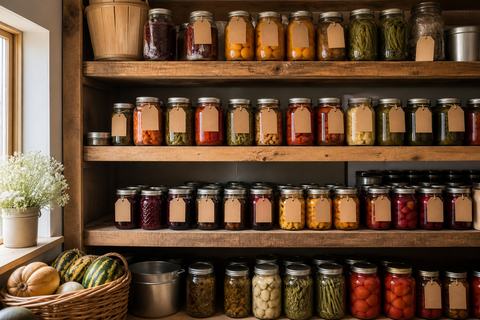
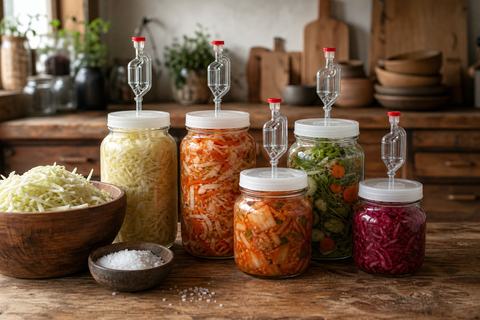
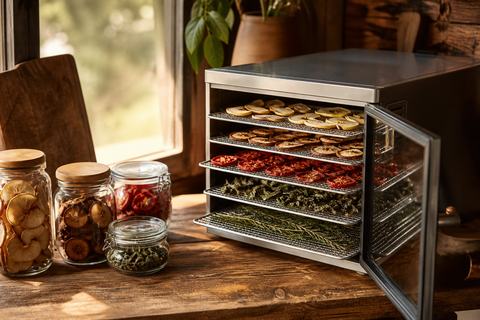
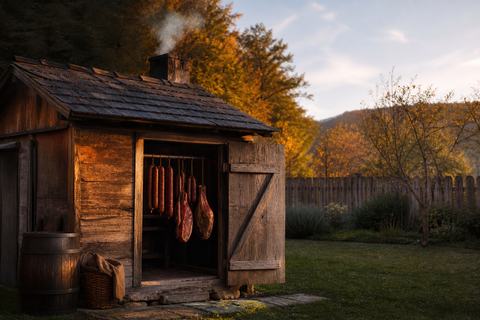
Not everything keeps in a cellar. For the rest, The Homestead Canning Book, The Homestead Fermenting Book and The Homestead Dehydrating Book cover the three other ways to put food by. If you're building dedicated cold storage rather than repurposing a basement corner, The Homestead Root Cellar & Food Storage Guide walks through a full buried-barrel root cellar build. Either way, the Canning Inventory & Pantry Log helps you track what's stored where and how long it's been down there. For the kitchen wall, the Root Cellar & Produce Storage Chart is a printable reference for storing common produce.
Browse the shop →