Aromatherapy at Home: A Beginner's Guide to Herbal Oils, Salves, and Candles from Your Own Land
Aromatherapy is simpler, older, and more cautious than the internet makes it look. The fun part is gathering the plants; the part that matters is the safety rules you follow after.
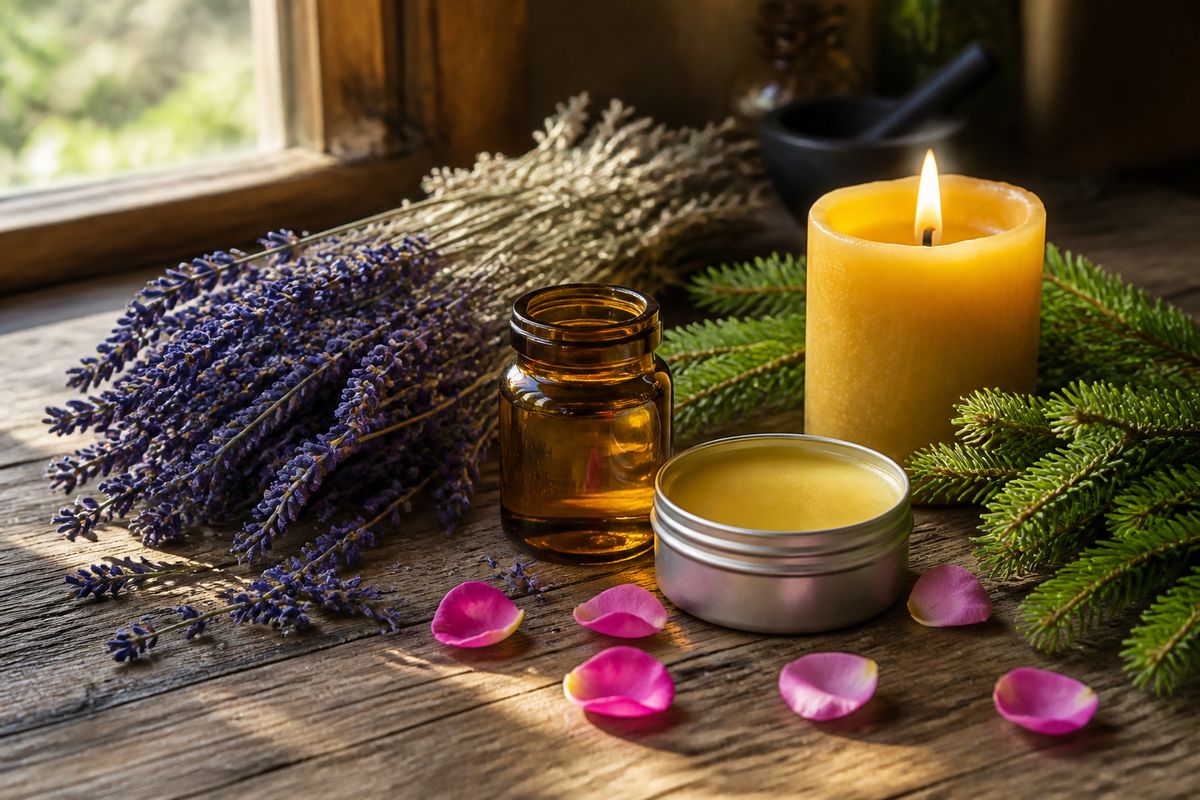
Aromatherapy is the use of plant scents, usually essential oils, to support relaxation and mood. The National Center for Complementary and Integrative Health (NCCIH) describes it as a complementary approach in which oils are usually inhaled or applied to the skin in diluted form. It also says plainly that research is thin: for sleep problems, little rigorous evidence exists, and in one study of stressed people a lemon scent lifted mood but did not change stress markers or pain control. So treat everything below as pleasant, traditional home craft, not medicine. If you have a health problem, see a clinician.
Start with the safety rules, not the recipes
Most aromatherapy trouble comes from using too much oil, not from using the wrong plant. The Tisserand Institute, a leading essential oil safety organization, is clear on the basics, and they are worth memorizing before you buy a single bottle:
- Never put undiluted essential oil on skin. Dilution and risk are closely linked: the more concentrated the blend, the more likely a reaction.
- Do not swallow essential oils unless a qualified practitioner has told you to, and never in plain water, where the oil floats and burns the mouth and stomach.
- Keep bottles out of children's reach, ideally with child-resistant caps. Toddlers have unscrewed caps and swallowed the contents.
- Essential oils are flammable. Keep them away from open flames, stoves, and wood stoves.
- Children, pregnancy, and pets need extra caution. Younger children need much lower dilutions than adults, and some oils are unsuitable for them. When in doubt, skip the oil.
If you or a child swallows essential oil or has a serious reaction, call your poison centre right away. In Canada the national number is 1-844-764-7669 (Quebec: 1-800-463-5060). In the US it is 1-800-222-1222.
What a homesteader can gather
You do not need to distill anything to enjoy plant aroma. Much of aromatherapy at home is simply the dried plant itself, in a sachet, a simmer pot, or an infused oil. In northern climates the reliable harvest looks like this:
- Garden herbs: lavender, mint, lemon balm, thyme, and calendula, picked after the dew dries and before midday heat, which is when oil content is highest. (Our herb garden guide covers growing and drying them.)
- Conifer tips and needles: spruce, fir, and pine are plentiful across Canada and the northern US and make a clean, woodsy simmer-pot or room-spray scent. Take a little from many branches rather than stripping one tree.
- Roses and other petals: wild and garden roses, picked dry in the morning from plants you know have not been sprayed.
- Spring buds and summer blossoms: poplar buds and lilac flowers are favourites for scented oils and waters.
Dry first, then infuse: the botulism rule
A scented herbal oil is just dried plant material steeped in a carrier oil such as olive or sweet almond. The key word is dried. Penn State Extension explains that fresh herbs and garlic are low-acid and can carry C. botulinum spores. Oil is an oxygen-free environment, so at room temperature those spores can grow and make toxin. Extension guidance for kitchen oils says oils made with fresh herbs must be refrigerated and used within 2 to 4 days, and oils made with dried herbs should still be refrigerated and used within about three months.
That guidance is written for food, but the same moisture and microbe logic is why careful makers dry plants completely first, keep oils in clean jars, and label with the date. Do not eat or cook with a homemade aroma oil, and discard anything cloudy, bubbly, or off-smelling.
A simple dried-herb scented oil
- Dry lavender buds, calendula petals, or rose petals until they crumble. Air drying takes several days in a warm, ventilated room; do not dry in direct sun.
- Fill a clean, dry jar about halfway with the dried plant. Cover with carrier oil, leaving the plant fully submerged.
- Steep in a warm spot out of direct sunlight for 2 to 4 weeks, shaking gently now and then. Strain through a fine cloth.
- Label with the plant, the date, and "external use only." Store in a cool, dark place, and refrigerate for longer keeping.
From scented oil to salve and candle
A basic salve is about one part beeswax to four or five parts infused oil, melted together gently and poured into tins. Test a spoonful on a cold plate: it should set to a spreadable, not rock-hard, texture. Add more wax if it is too soft. Keep any added essential oil within your dilution percentage for the weight of the finished salve.
For candles, keep essential oil modest, a few percent of the wax weight at most, and add it once the wax has cooled slightly off the heat so it does not burn off or flash. Use a proper wick sized to the container, never leave a burning candle unattended, and keep it away from curtains and drafts.
Hydrosols, baths, and other pitfalls
Homemade plant waters spoil faster than most people expect. Keep them refrigerated and use them within a week or two. Skip essential oils in the bath: oil and water do not mix, and neat droplets can sit on skin. A cloth bag of dried herbs steeped in the tub is the gentler route. Some plants, including cedar, birch, sage, and rosemary, are better enjoyed as aroma only rather than on skin.
Want the whole grimoire, with every plant, recipe, and safety chart?
The Homestead Grimoire of Aromatherapy is a 179-page illustrated book for Canadian and northern US homesteads. It covers when and where to harvest roses, conifers, and garden herbs, a plant atlas with never-pick warnings, scented oils, salves, candles, hydrosols, and seasonal blends, with the dilution and shelf-life rules built into every recipe.
See the Grimoire →