How to Raise Pigs for Meat at Home: A Beginner's Guide
A weaned feeder pig started in spring can be freezer-ready by fall — but pigs grow fast, eat by the pound, and root through fencing that would hold anything else. Here's what a first-timer actually needs to know before bringing one home.
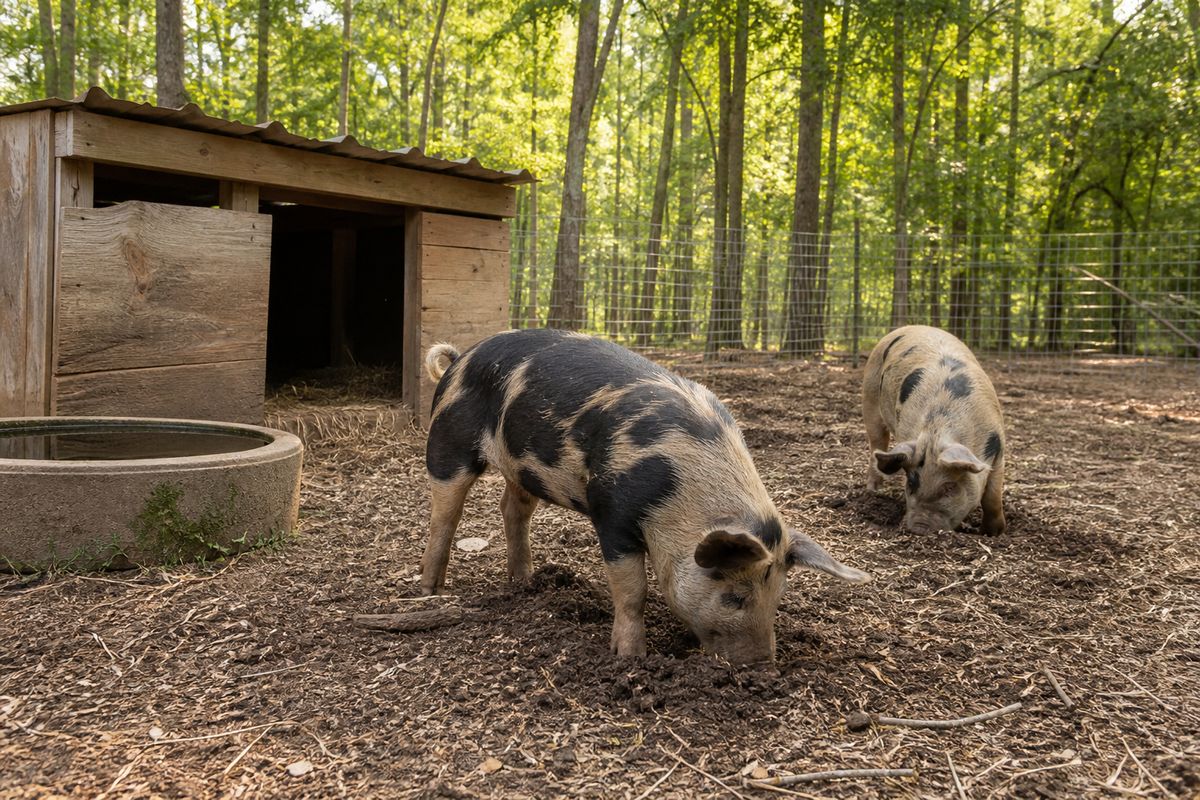
Most backyard pig projects start the same way: a 40–50 lb weaned feeder pig arrives in late spring and is ready for processing at 250–280 lbs by late fall. That six-month window is short compared to most homestead animals, which makes pigs one of the more approachable large-livestock projects for a beginner — but it also means mistakes compound fast. The numbers below come from university swine-extension programs, not forum guesswork.
How much space do pigs actually need?
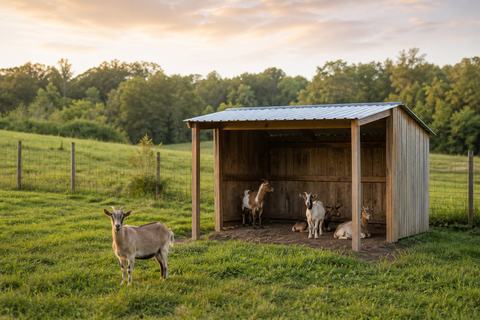
Penn State Extension puts baseline indoor space for growing pigs at around 8 square feet per pig. Outdoors, a simple three-sided shelter is enough shade and windbreak for pasture-raised pigs — you don't need a fully enclosed barn. What you do need to plan for is rooting: pigs will dig up and churn any patch of ground they're kept on, so budget for a muddy, cratered pen and rotate pasture space if you can, rather than being surprised by it after the fact.
Fencing that actually holds a pig
A pig's nose is strong enough to lift and push under most fencing that would stop a goat or a sheep. Extension guidance is specific about the fix: run one strand of electric wire at ground level inside the pen, close enough to the fence line that a pig gets a reminder before it starts rooting underneath. One placement mistake to avoid: don't run hot wire directly across the entrance gate — pigs remember exactly where they were shocked and will refuse to walk back through that spot, which turns a simple gate into a daily standoff. Loading chutes and ramps should be solid-sided, not open rail, since a startled pig will bolt sideways through any gap it can see.
Feed by weight: the protein steps down as they grow
Unlike animals that eat one consistent ration, a growing pig's feed formulation changes every few weeks as its protein needs drop:
| Pig weight | Crude protein | Lysine |
|---|---|---|
| 10–20 lbs | 24% | 1.44% |
| 20–45 lbs | 21% | 1.38% |
| 45–100 lbs | 18% | 1.06% |
| 100–150 lbs | 16% | 0.92% |
| 150+ lbs | 13% | 0.72% |
Oregon State University Extension recommends a commercially premixed ration over a homemade mix for a first-time feeder, since hitting these protein/lysine targets by hand is easy to get wrong. Expect a feed conversion of roughly 2.5–3 lbs of feed for every pound of weight gain, with pigs on a good ration typically putting on 1.5–2 lbs a day — that's the math behind the six-month timeline to market weight.
Water and temperature
Pigs need constant access to clean water, and extension programs specifically recommend automatic nipple or drum waterers over buckets, placed away from the feeder so bedding stays dry rather than turning to mud. Temperature needs shift with size: a 50 lb pig does best between 70–82°F and needs supplemental heat below that, while a pig over 200 lbs needs active cooling (shade, a wallow, or misters) once temperatures hold above roughly 70°F for extended periods. A normal pig's body temperature runs about 102.5°F ± 1°F — worth knowing as your baseline before you ever need to check a sick animal against it.
Before you buy: health and sourcing
Line up a veterinarian before you bring a pig home, not after something goes wrong. Penn State Extension advises buying from a reputable breeder who can show health records, and avoiding livestock auctions for a first pig specifically because of the disease-exposure risk from mixing animals from many sources in one place. Watch for coughing, fever, loss of appetite, lethargy, or labored breathing as your early warning signs once pigs are home.
Keep the whole season on one page
Feed-transition dates, weights, health notes, and processing costs are easy to lose track of by month two of a six-month growout. The Pig & Hog Record Book gives you a printable system built specifically for a feeder-pig season, breed notes included.
Browse the shop →More Goats, Sheep, Pigs & Cows guides
Free tool: Fence cost calculator →