
How to Start Raising Sheep at Home: A Beginner's Guide
Sheep have a reputation as an easy first livestock animal — good pasture and a fence, or so it seems. In practice, the breed you pick, the fence you build, and the mineral feed you buy are exactly where beginners go wrong, and one of those mistakes can kill a flock.
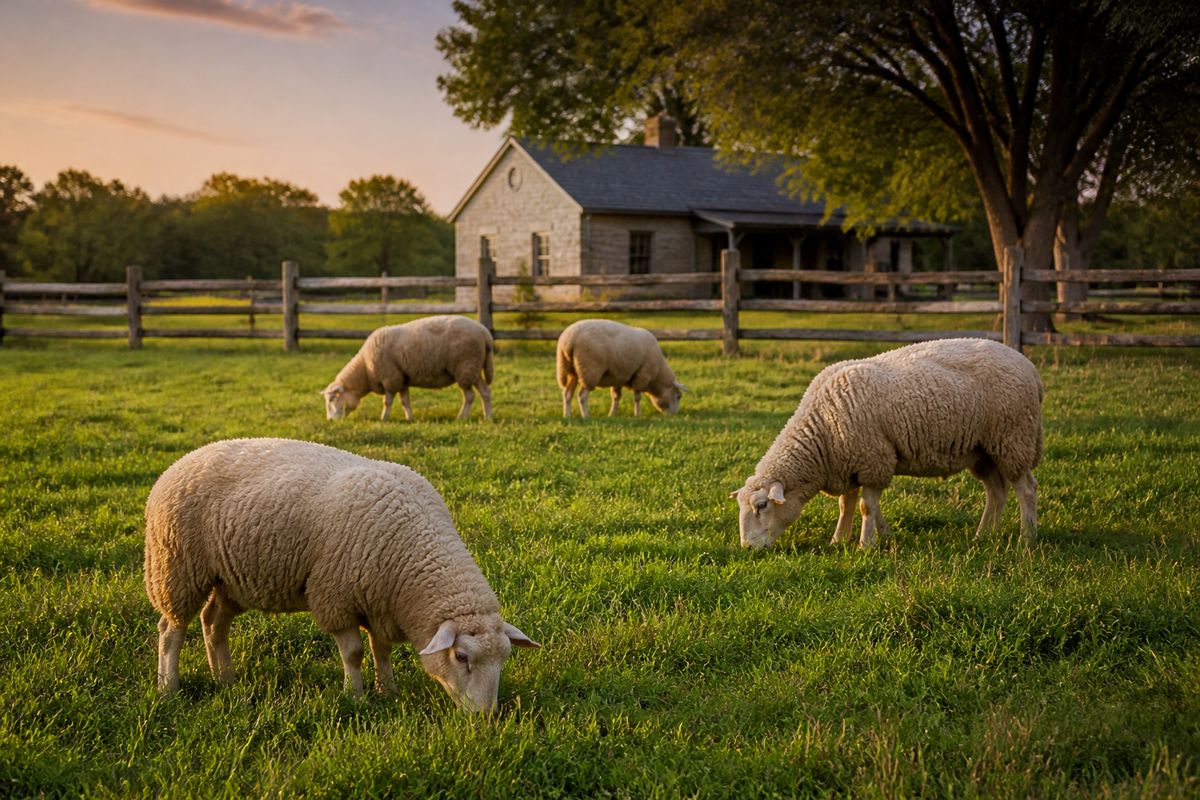
Before buying a single ewe, it's worth understanding three things that aren't obvious from the outside: sheep fencing has to do more work than cattle fencing, sheep cannot safely eat the same mineral mixes as goats or cattle, and the breed decision (wool vs. hair) changes your yearly workload permanently. University extension research covers all three in detail.
Wool breed or hair breed? Start with your goal
Penn State Extension notes there are more than 60 sheep breeds in the U.S., and the right one depends on what you actually want: meat, wool, or a dual-purpose animal. According to Cornell Small Farms, the practical split beginners should understand first is wool breeds vs. hair breeds:
- Wool breeds (Merino, Romney, Bluefaced Leicester, Shetland, Icelandic, and dual-purpose meat/wool breeds like Dorset, Suffolk, Hampshire, and Shropshire) need shearing once a year, whether or not you have any use for the fleece. With wool markets largely collapsed outside fine-wool and hand-spinning niches, Cornell Small Farms points out that shearing has become "a cost rather than a source of income" for most small flocks.
- Hair breeds (Katahdin — the most widespread hair sheep in the U.S. — along with Dorper and White Dorper) shed their coat naturally and never need shearing at all, which removes an entire annual chore and expense.
If you don't have a real market or hobby use for wool, a hair breed is usually the simpler choice for a first flock.
Fencing that actually holds a sheep
Oklahoma State University Extension is specific about what works and what doesn't:
- Barbed wire can contain grown ewes but not lambs, which slip through easily — fine for a flock without lambs, not a breeding flock.
- Hog wire (woven wire) is, in OSU's words, "probably the best permanent wire fencing" option aside from electric.
- Electric fencing is the top choice for predator control. OSU recommends a seven- or eight-wire electric fence roughly 48 inches high, with tighter wire spacing near the ground to stop both lambs and predators.
Shelter and space per animal
You don't need an elaborate barn. OSU Extension gives concrete space numbers for basic shelter:
| Animal | Space needed |
|---|---|
| Adult ewe | 10–12 sq ft |
| Ewe-lamb pair | 12–16 sq ft |
| Feeder lamb | 6–8 sq ft |
Penn State Extension notes that in mild climates, "simple shelter is all that's required" — an existing outbuilding that's dry and out of the wind is usually enough. Lambing during cold or wet weather is the one time you'll want something more substantial, since newborn lambs chill fast.
Feeding sheep through the year
Penn State Extension sums up sheep feeding simply: "Feeding a healthy flock requires nothing more than good pasture land for the majority of the year. In winter and during a drought, however, you will need to supplement their diet with hay or grain." OSU adds that sheep prefer fine-stemmed grasses over coarse pasture, and that well-managed pasture can support roughly five to ten ewes per acre in season. One number worth planning around: Penn State notes a ewe needs almost twice as much feed for the first two and a half months after lambing, while she's nursing, compared to the rest of the year.
Breeding and lambing basics
Gestation runs about five months, per NC State Extension. Most small flocks breed in the fall (September through January) for births the following February through June — timed, per OSU, so lambs arrive when pasture growth can support the extra feed demand. Some breeds, like Dorset, are known for breeding well outside the typical fall window if you need a different lambing schedule.
NC State Extension's lambing-season checklist is worth keeping on hand before your first lambing: ewes need roughly 16% protein in the final 30 days of pregnancy and through lactation to produce good colostrum; newborns must nurse colostrum within 24 hours for immunity; navel cords should be treated with iodine to prevent infection; and a basic kit (ear tags, record sheets, gloves, lubricant, iodine, a feeding tube, and backup colostrum) covers most of what a normal lambing needs.
How many sheep to start with
OSU Extension's advice for anyone new to sheep, even at commercial scale, is to start small and build up: begin with a manageable number, learn the rhythm of the flock for a year, and expand once you're comfortable. Sheep demand a higher level of day-to-day management than beef cattle — a smaller starting flock is what makes that learning curve manageable rather than overwhelming.
Keep the whole flock's records in one place
Once lambing, feeding, and health records start piling up, a dedicated log beats a scattered notebook. The Sheep Flock Record Book covers breeding and lambing logs, feed and health tracking, and a shearing schedule, built specifically for small home flocks.
Browse the shop →More Goats, Sheep, Pigs & Cows guides
Free tool: Fence cost calculator →
- Sources:
- Penn State Extension — Raising Sheep: Production and Management
- Oklahoma State University Extension — Starting a Sheep Enterprise
- Cornell Small Farms — Introduction to Sheep Breeds
- Cornell Cooperative Extension (SWNY Dairy, Livestock & Field Crops) — Tips for Avoiding Copper Toxicity in Sheep
- NC State Extension (Robeson County) — Kidding/Lambing Season