
Keeping a Family Milk Cow: A Beginner's Guide
A single family cow can supply more dairy than most households can use — but a cow is a much bigger commitment than a goat, and the breed, space, and feed decisions you make before she arrives are the ones that decide whether the whole thing actually works.
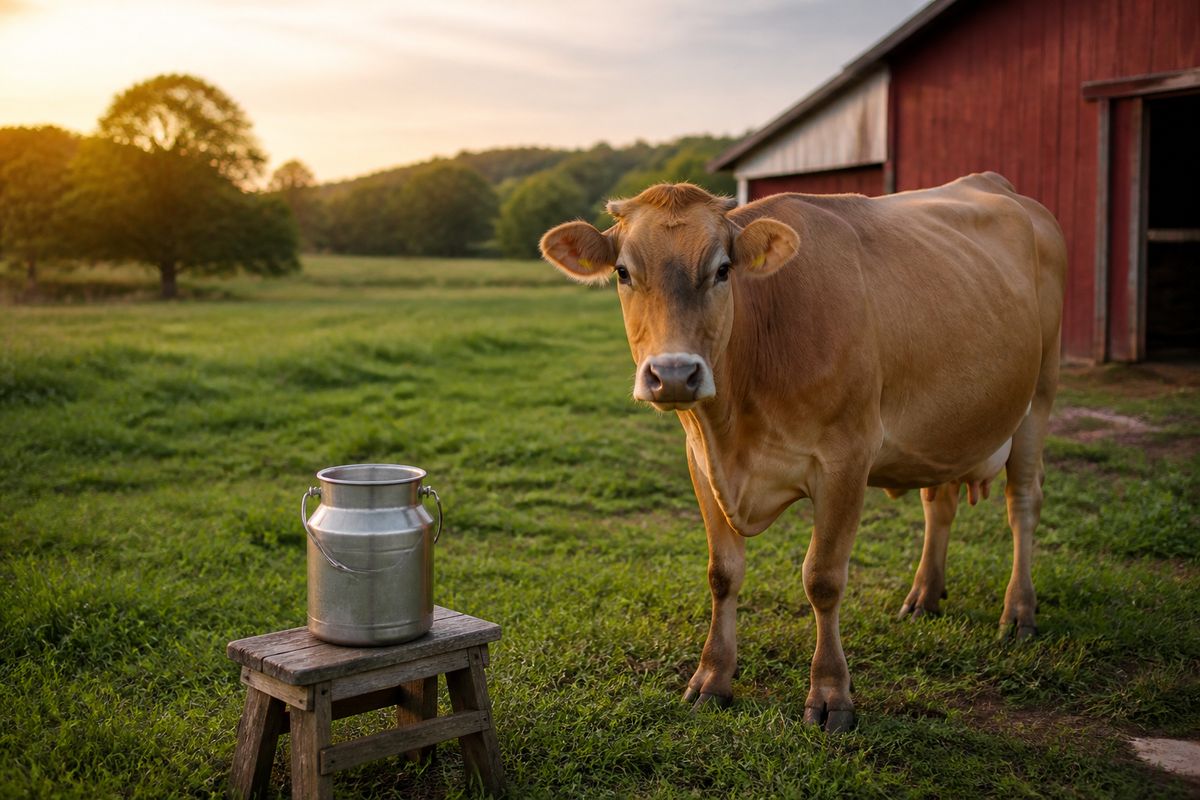
Before bringing home a cow, it helps to know what the extension research actually says about three things beginners usually guess at: which breed fits a small operation, how much space and water a cow genuinely needs, and why the weeks before calving matter more than any other point in her year.
Jersey or Holstein? Picking the right breed for a small operation
According to UC ANR (University of California Agriculture and Natural Resources), the two most familiar dairy breeds split into very different roles. Holsteins — the black-and-white (occasionally red-and-white) breed most people picture when they think "dairy cow" — are built for volume, averaging around 2,900 gallons of milk per lactation, but their milk runs lower in butterfat and protein. Jerseys, smaller and brown with a distinctive black muzzle, produce less total volume but richer milk, higher in both butterfat and protein — which UC ANR notes makes them the breed better suited to a home dairy operation, where a family wants quality and manageable quantity rather than maximum output.
How much space a cow actually needs
Numbers vary a bit by source, but the range gives a realistic picture. UC ANR puts the bare-minimum stall size for a 1,200 lb cow at 32 square feet, while NC State Extension's homestead dairy guidance recommends a more comfortable 75–100 square feet of stable space per cow, with concrete or similarly finished flooring (to prevent slipping), washable walls, and enough ventilation that the space doesn't get stuffy. Outdoors, plan on 1–2 acres of grazing per cow — more if your pasture is thin or your climate is dry.
| Need | Minimum | Comfortable |
|---|---|---|
| Indoor stall / stable | 32 sq ft | 75–100 sq ft |
| Grazing / exercise land | 1 acre | 1–2+ acres |
For fencing, UC ANR notes a single strand of electric wire is usually enough to hold a cow — far less fencing than goats need, since cows aren't the climbers or escape artists goats are. NC State adds that barbed wire, electric wire, or woven wire all work as perimeter options; whichever you choose, a secure permanent boundary around the whole property matters more than the fencing style itself.
Feeding and water: a bigger appetite than people expect
UC ANR's rule of thumb: a milking cow eats roughly 3–4% of her body weight in hay or pasture dry matter per day — for a 1,000 lb cow, that's 30–40 lbs daily, balanced with some grain to avoid poor performance and low milk production.
Water intake is the number that surprises most new keepers. The University of Arkansas Cooperative Extension Service's water-quality guidance for dairy cattle puts a 1,500 lb lactating cow's daily intake at roughly 18–36 gallons, depending on how much milk she's producing and the temperature — intake climbs by about 1.5 lbs of water per degree Fahrenheit as it gets hotter. Cows don't drink evenly through the day either: they take in 30–50% of their daily water within an hour after milking, so a reliable water source right at the milking area matters as much as total tank capacity.
Milking, and why the "dry period" matters
For a one- or two-cow home operation, NC State Extension recommends hand milking rather than installing commercial equipment, done in a dedicated space with washable flooring and a hooded pail — and any milk for drinking needs proper handling and, depending on your local raw-milk rules, pasteurization.
Breeding and calving rhythm
A cow carries a calf for roughly nine months. Alabama Cooperative Extension's guidance describes a healthy, well-managed dairy operation as running on a 12- to 13-month calving interval — meaning she's rebred not long after calving so the cycle of milk, rest, and calving repeats on a predictable yearly rhythm rather than drifting later and later.
Start with realistic expectations
A single family cow — especially a Jersey — produces far more milk than most households drink fresh, which is exactly why cheese, butter, and other dairy projects become part of keeping one. Between the daily milking commitment, the water and hay volumes above, and the management around calving and the dry period, a cow is a bigger day-to-day commitment than almost any other homestead animal. Most new keepers do well to visit an experienced small dairy operation before buying, and to have a plan in place — whether that's a neighbor, a 4-H family, or a local dairy — for someone to cover milking if you're ever away.
Track breeding, feed, and health in one place
Once you're managing calving dates, feed amounts, and the dry-period calendar for a real cow, a dedicated record book beats scattered notes. The Dairy Cow Record Book covers breeding and calving logs, feed and health tracking, and a milking log, built for small home dairy operations.
Browse the shop →More Goats, Sheep, Pigs & Cows guides
Free tool: How many animals per acre calculator →

- Sources:
- UC ANR — Dairy Animals for Small-Acreage Landowners
- NC State Extension (Watauga County) — Homestead Dairy Cows: The Basics
- University of Arkansas Cooperative Extension Service — Quantity and Quality of Water for Dairy Cattle (FSA-4021)
- Alabama Cooperative Extension System — Managing and Caring for the Dry Cow