Building a Goat & Sheep Loafing Shed: A Beginner's Guide
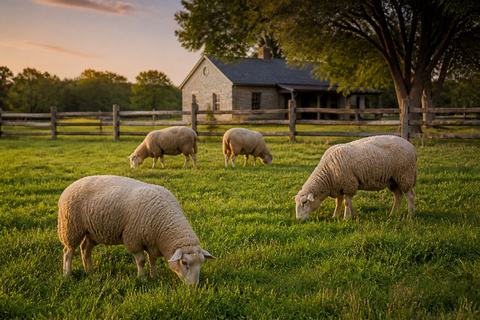
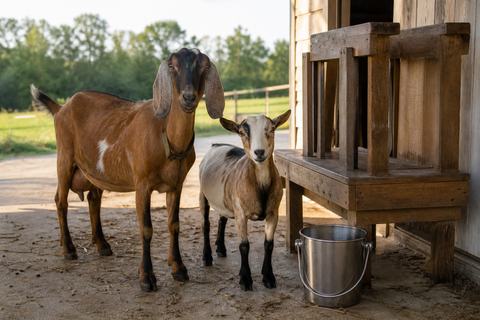
Goats and sheep don't need a barn — most of the year, a simple open-front shed they can walk into on their own is all the shelter they actually use. But "simple" still has real requirements: how much floor space per animal, which way the open side should face, and how much bedding actually keeps a shed dry.
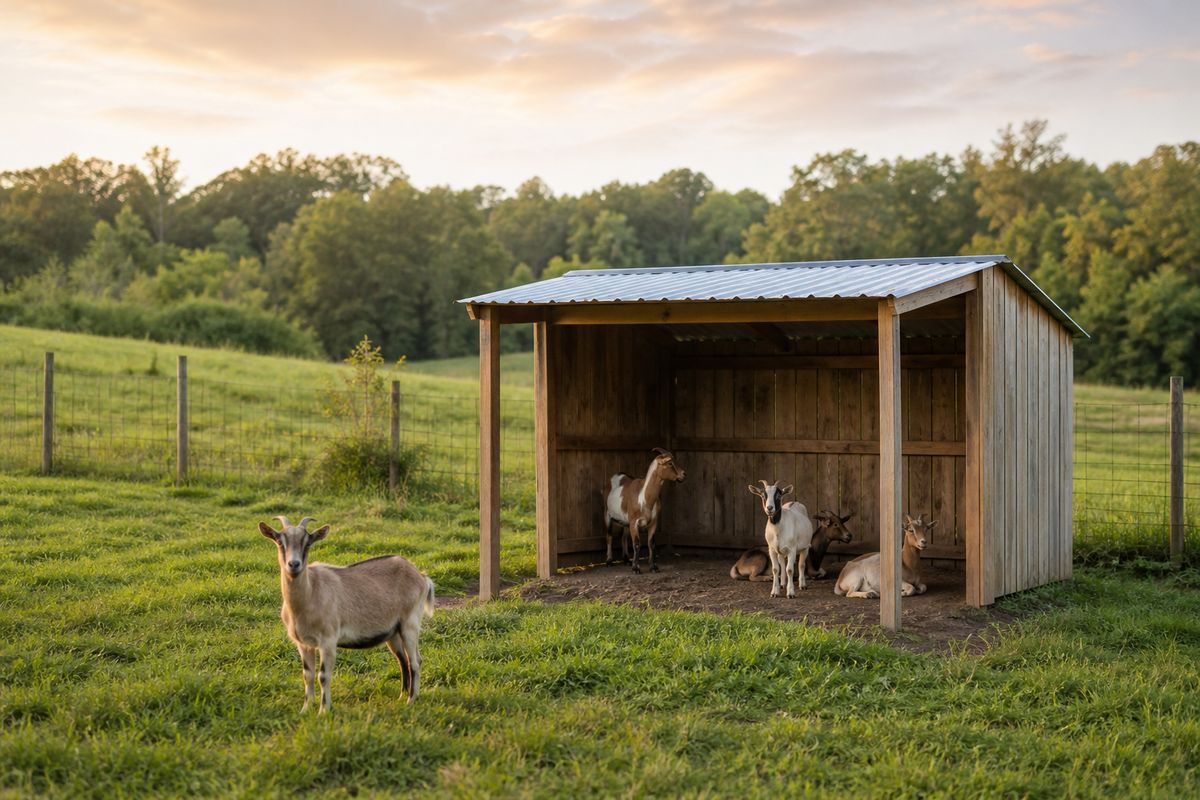
A loafing shed (also called a run-in shed) is a three-sided structure animals can come and go from at will, rather than a fully enclosed barn they're shut into. It's the standard small-ruminant shelter recommended by university extension livestock programs, and it's simple enough to build in a weekend — as long as you get the sizing and siting right before you start cutting lumber.
How much space each animal actually needs
Space requirements differ by species and by how the animals are managed. For goats, the guidance from Oklahoma State University Extension's meat goat program is:
| Goat housing type | Space per mature goat |
|---|---|
| Open housing (loafing shed + yard) | 10–15 sq ft of bedded shelter space |
| Complete confinement | 20 sq ft of floor space |
| Exercise yard (in addition to shelter) | At least 25 sq ft |
For sheep, Penn State Extension's figures run a bit higher per head, and scale up further once lambs are in the picture:
| Sheep housing type | Space per ewe |
|---|---|
| Indoor/shed, maintenance | 12–16 sq ft |
| Indoor/shed, with lambs at side | 15–20 sq ft |
| Outdoor lot (shed + yard), maintenance | 25–40 sq ft |
| Outdoor lot, with lambs | 30–50 sq ft |
| Rams | 20–30 sq ft |
If you're lambing in the shed rather than out on pasture, set aside individual lambing jugs sized to the ewe: 4 ft × 4 ft for small to medium ewes, 5 ft × 5 ft for larger ewes.
Siting the shed
Where the shed sits matters as much as its square footage:
- Orientation: the open front should face south or east, away from prevailing winter winds — this is consistent guidance from both Penn State and University of New Hampshire Extension. A shed with its open side facing the wrong way can end up colder inside than no shelter at all, since the wind simply funnels straight through it.
- Site selection: build on elevated, well-drained ground, not a low spot that collects runoff. Keep winter access to the shed in mind when you choose the exact spot — you'll be feeding and hauling water to it in snow and mud, too.
- Setback: plan on roughly 50 ft back from property boundaries as a general siting guideline, and check your own local zoning before you build, since setback rules vary by town and county.
Flooring, bedding, and ventilation
On a dirt floor, 3 to 4 inches of wheat straw or lower-quality hay makes adequate bedding; if the shed has a concrete floor instead, go deeper — 5 to 6 inches — since concrete offers no drainage of its own and gets colder than packed earth. A three-sided open-front design is, by its nature, naturally ventilated through the open side, which is exactly what you want: stale, humid air buildup is a bigger practical problem in small-ruminant housing than drafts are, since it's tied directly to pneumonia and other respiratory issues. If you ever convert the shed to a fully enclosed structure instead, extension guidance calls for 1 to 2 sq ft of window space per animal to keep airflow adequate.
Feeder space, while you're planning the layout
Worth sizing into the shed or an attached feed area from the start, since retrofitting a feed rail later is more work than building it in:
| Animal / feeding method | Feeder space needed |
|---|---|
| Ewes, limit-fed | 16–20 in. per head |
| Ewes, self-fed (maintenance) | 4–6 in. per head |
| Ewes, self-fed (nursing) | 6–8 in. per head |
| Lambs, 5–30 lb | 2 in. per head |
| Lambs, 30–110 lb (limit-fed) | 9–12 in. per head |
Full build plans, ready to follow
A 43-page, step-by-step picture manual with a cutting diagram for every board is in the shop: the Homestead Goat & Sheep Loafing Shed Build Manual. It is made for first-time builders, one simple job per illustrated step. New to keeping either animal? See How to Start Raising Sheep at Home or How to Start Raising Backyard Dairy Goats, and track breeding, feed, and health with the Sheep Flock Record Book or Goat Herd Record Book.
Browse the shop →More Goats, Sheep, Pigs & Cows guides
Free tool: Fence cost calculator →