
Raising Coturnix Quail for Meat: A Beginner's Guide
A Coturnix quail goes from hatched egg to freezer-ready meat in about seven weeks — faster than almost any other backyard meat animal, and in a fraction of the space a meat-bird chicken flock needs. Here's what the numbers actually look like.
Why Coturnix, and what to expect going in
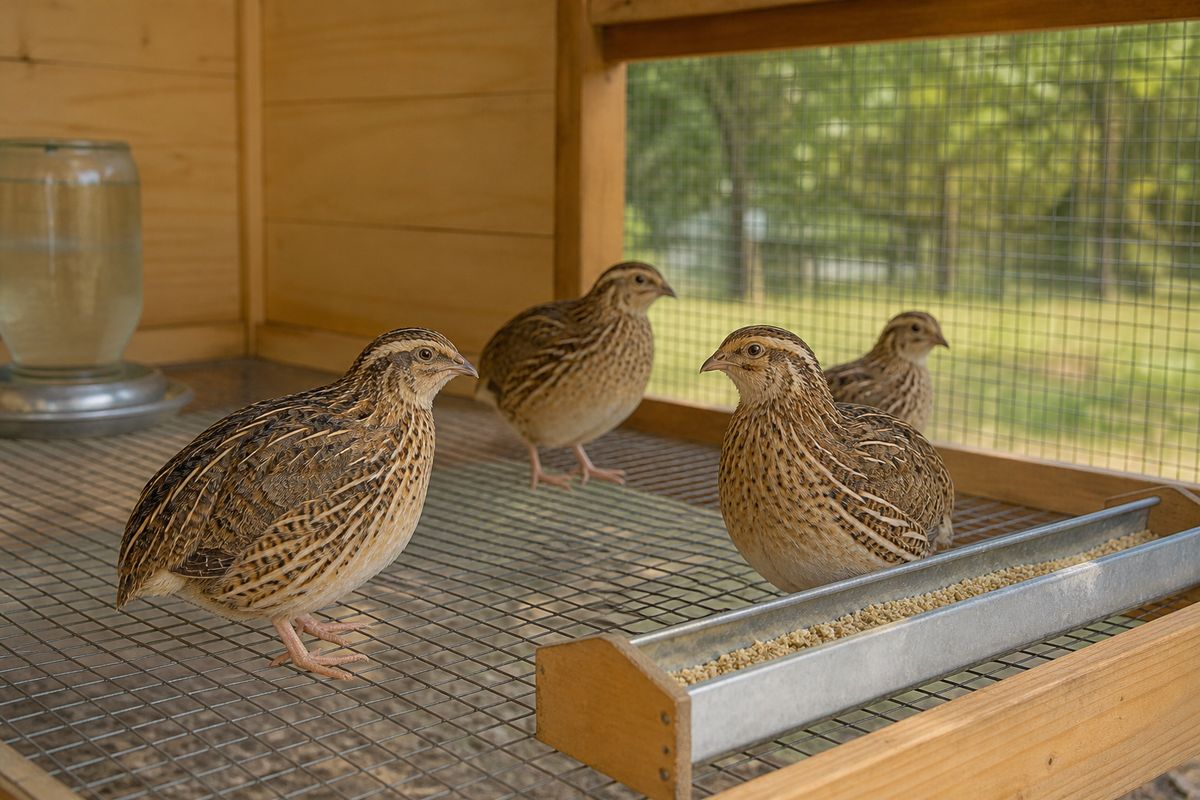
Japanese Coturnix (Coturnix japonica) is the strain almost every backyard meat-quail keeper raises. A heavy-muscled meat strain reaches roughly 10–13 ounces live weight by about 7 weeks old, according to Texas A&M AgriLife Extension — compare that to the 16–18 weeks a standard meat-bird chicken needs to finish out. The tradeoff is size: a dressed quail is a one- or two-person serving, not a whole-family roast, so most keepers plan around batches rather than a single bird at a time.
You can start a flock either from day-old chicks bought from an NPIP-participating breeder (the simplest path for a first batch) or by incubating hatching eggs yourself once you already have a breeding trio or two.
Incubating your own eggs
If you're hatching rather than buying chicks, Oklahoma State University Extension's incubation reference lists a 16-day incubation period for Coturnix quail eggs — shorter than the 21 days most people associate with chicken eggs, and something to plan your brooder setup around in advance. The same reference's general forced-draft incubator guidance (for eggs broadly, not quail-specific) runs a steady 99–100°F with humidity around 60% relative humidity, rising to about 70% once eggs begin to pip. Commercial quail-incubation sources commonly describe a similar window stretched slightly longer, to 17–18 days, with a humidity bump and no more turning in the last few days before hatch (a "lockdown" period) — follow your incubator's own manual for the turning schedule, since models vary.
Space by age: brooder, grower, adult
Texas A&M AgriLife Extension's home-production guidance gives three space bands as chicks grow, and overcrowding at any stage is the fastest way to stress a batch into pecking or poor growth:
| Age | Space |
|---|---|
| 0–2 weeks (brooder) | Up to 6 chicks per sq ft |
| 2–6 weeks | Up to 4 birds per sq ft |
| After 6 weeks (grow-out to harvest) | Up to 3 birds per sq ft |
That last number — 3 birds per square foot even at full size — is the headline reason Coturnix fits where a meat-bird chicken flock can't: a 4x4 ft grow-out pen comfortably finishes close to 48 birds.
Brooding temperature, week by week
Chicks need 95–97°F at chick level for the first week, dropped by about 5°F each week after until they're fully feathered and the brooder is around 75°F. Temperature control matters most in the first four weeks. For a small brooder, AgriLife's rule of thumb (three 125-watt infrared bulbs, 18–20 inches above the floor, for 250 chicks) scales down easily — but the more reliable guide is always the chicks themselves: crowding directly under the heat source means they're cold, and chicks spread out against the brooder walls away from the heat means it's too warm.
Feed protein by age
A game-bird starter at 26–30% protein from hatch through 6 weeks, then a 20% game-bird grower after that, is the standard AgriLife recommendation — a noticeably higher starter protein level than a chicken starter feed, which is part of why quail finish out so much faster on a similar timeline-per-ounce basis.
A common health issue to know before you start
Ulcerative enteritis ("quail disease") is a bacterial intestinal infection that Mississippi State University Extension identifies as a recurring problem specifically in quail, causing progressive weight loss and breast-muscle wasting before death, often showing up at different stages across the same flock. Their prevention guidance is almost entirely about keeping outside bacteria out rather than treating an outbreak after the fact: clean water (nipple waterers help), no visitor traffic through bird areas, disinfected equipment, hatching your own replacement stock instead of buying in adult birds, and strict caretaker hygiene — clean clothing and disinfected footwear before entering the rearing area. Their blunt summary is worth repeating: caretakers themselves are usually what spreads an outbreak between pens, so keeping people and borrowed equipment out does more good than any treatment after symptoms appear. If you do see unexplained weight loss or wasting in a flock, that's a vet-and-diagnosis situation, not a home-remedy one.
Harvest, chilling, and freezing
Withhold feed and water for 4–6 hours before slaughter, per AgriLife's guidance, and expect a dressing percentage around 72% of live weight. From there, Penn State Extension's game-bird handling guidance applies directly: get the carcass cold fast (35–40°F), never stack warm birds together while they're still cooling, and hold them at 40°F or below until you're ready to freeze or cook. AgriLife specifically recommends an ice-water slush chill of at least 2 hours. For the freezer, wrap tightly with as much air pressed out as possible, leave space between packages until they're solidly frozen (about 24 hours), then stack — properly wrapped quail holds its quality for roughly 9–12 months, a figure both AgriLife and Penn State agree on independently. Cook quail (like any poultry or game bird) to a verified internal temperature of 165°F.
From incubation calendar to dinner table
This article covers the reasoning and the key numbers; The Homestead Meat Quail Guide is a full 45-page ebook built around this exact timeline — a day-by-day incubation calendar, a week-by-week grow-out schedule, a troubleshooting table, processing and dressing steps, and six kitchen-tested recipes for cooking what you raise.
Browse the shop →More Chickens & Poultry guides
Free tool: Chicken coop size calculator →
- Sources:
- Texas A&M AgriLife Extension — Quail Production for Home Consumption
- Oklahoma State University Extension — Incubation fact sheet (ANSI-8100)
- Mississippi State University Extension — Ulcerative Enteritis in Quail
- Penn State Extension — Proper Care and Handling of Game Birds From Field to Table