How to Raise Meat Rabbits at Home: A Beginner's Guide
Rabbits take up less space than almost any other backyard livestock and reach market weight in under three months — but cage size, feeding discipline, and sanitation are where most first-time rabbit keepers go wrong.
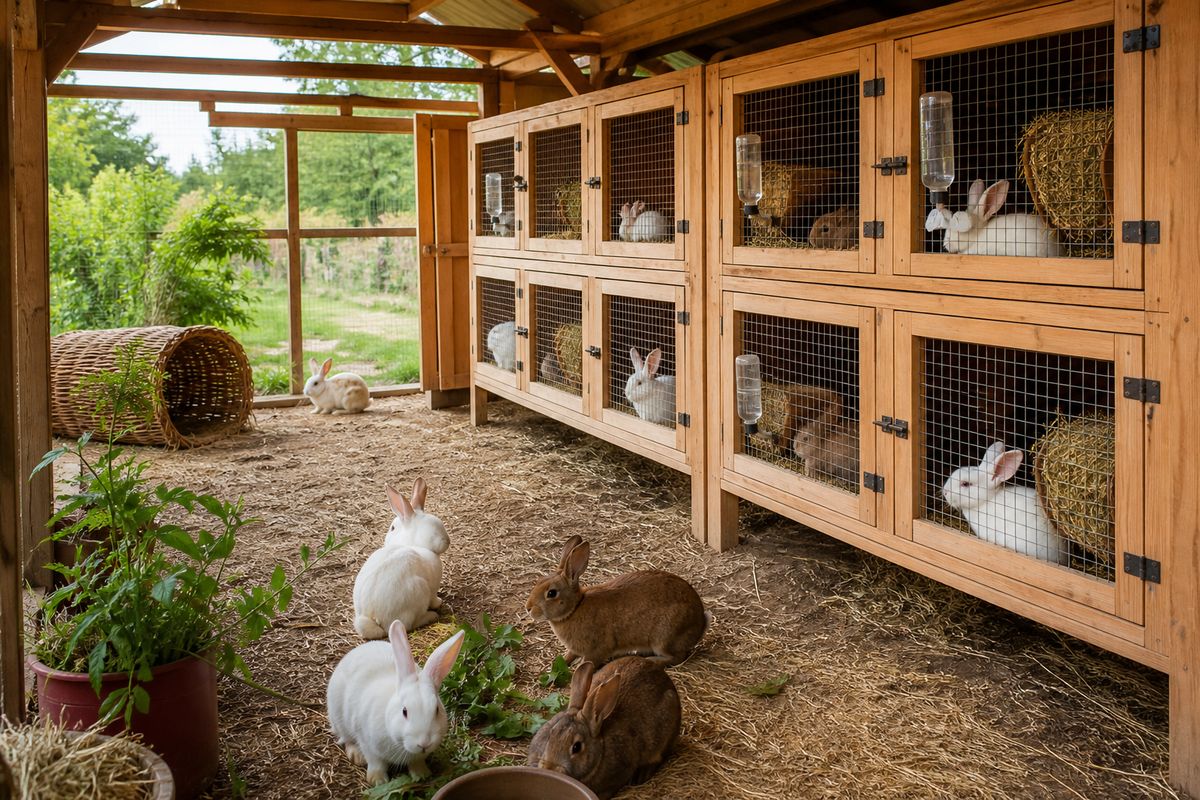
A single doe can produce 25 to 50 kits a year, yielding 125 to 250 pounds of meat from an animal that fits in a backyard shed and eats a fraction of what a goat or pig needs. That efficiency is exactly why rabbits are one of the most popular "gateway" homestead animals — but the margin for error on housing, feed, and nest-box timing is smaller than it looks. Here's what university extension research actually recommends, before you bring home your first pair.
Choosing a breed for your goals
Match the breed to what you actually want from it. Extension guides group rabbit breeds by principal use rather than by looks:
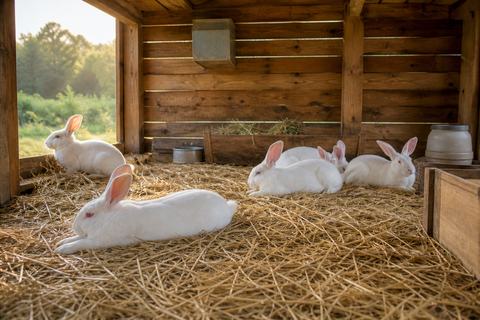
- Meat production: medium-weight, white-furred breeds like New Zealand White and Californian are the standard choice — they grow quickly to a uniform fryer weight, and white pelts can be dyed any color if you ever sell them.
- Fiber: Angora rabbits produce wool for spinning, but selling that wool takes its own market — most beginners start with a meat breed first.
- Dual-purpose or show: breeds like American Chinchilla and English Spot work for both meat and exhibition if you want to show at fairs later.
Housing: cage size actually depends on the rabbit's weight
Undersized cages are one of the most common beginner mistakes. Extension minimum floor space scales directly with adult body weight:
| Adult rabbit weight | Minimum floor space |
|---|---|
| Under 4.4 lb | 1.5 sq ft |
| 4.4 – 8.8 lb | 3.0 sq ft |
| 8.8 – 11.9 lb | 4.0 sq ft |
| Over 11.9 lb | 5.0 sq ft |
Cage height needs a minimum of 16 inches so a rabbit can sit up fully with ears erect. Build with 14–16 gauge welded wire: sides and top around 1×2 inch mesh, with a finer ½×1 inch mesh floor that lets droppings fall through and stays close to self-cleaning. Skip hardware cloth for flooring — its rough edges irritate rabbits' feet and manure clings to it more than to welded wire.
Feeding and water
Commercial pelleted feed formulated for rabbits is the simplest way to hit the 16–18% crude protein growing rabbits need — casual greens and scraps alone don't reliably meet nutritional requirements and can cause digestive upset. Feed once daily, generally in the evening, and only enough to be cleaned up before the next feeding; leftover feed can mold and sicken rabbits. Non-breeding does typically need 6–8 ounces of pellets a day, while a nursing doe should have unlimited access to feed.
Water matters more than feed. A doe nursing a litter needs about 1 gallon of water a day in warm weather, and a rabbit that runs out of water will stop eating within hours. Automatic waterers reduce contamination risk compared to open bowls.
Breeding, kindling, and weaning timeline
Does can be bred starting around 6–7 months old. Gestation runs 31 to 32 days (30–33 days is the normal range), producing litters of roughly 8–10 kits. Put a nest box in the cage around day 28 of pregnancy, lined with wood shavings or grass hay — a typical nest box measures about 18 inches long, 12 inches wide, and at least 12 inches high, with the opening facing the back of the hutch.
- Kits nurse exclusively for about 3 weeks, open their eyes around day 14, and start exploring outside the nest box by week 3.
- Provide supplemental feed and water starting around week 3 as kits begin sampling solid food.
- Wean and separate from the doe around 8 weeks, by which point kits should weigh roughly 4–4.5 lb — the target market/fryer weight.
- Separate growing rabbits by sex around 3 months old, then move to individual cages by 5 months to prevent fighting and unplanned breeding.
A well-managed doe can produce about five litters a year.
Health warning signs to watch for
| Condition | Warning signs |
|---|---|
| Coccidiosis | Poor appetite, dull/listless behavior, weight loss, diarrhea, rough coat |
| Snuffles | Nasal discharge, head shaking, watery eyes |
| Sore hocks | Scabs on hind feet; rabbit lies stretched out rather than sitting normally |
| Ear canker | Scabs inside the ears; frequent head shaking and scratching |
| Heat stroke | Heavy panting, drooling, rapid breathing — rabbits tolerate heat poorly |
Isolate any sick rabbit immediately, tend healthy animals first and sick ones last, and wash your hands in between. Culling candidates typically include animals with buck teeth, crooked bones, abscesses, or chronic respiratory symptoms, since these traits tend to be passed on or worsen over time.
From your first hutch to a full record-keeping system
Once your rabbits are settled, tracking breeding dates, litters, and feed costs is what actually makes a small rabbitry manageable long-term. The Rabbit Flock Record Book covers herd inventory, breeding and kindling logs, and growth tracking — and if you're still planning your setup, the Rabbit Hutch Build Guide walks through a complete elevated-hutch build with predator-proofing and heat-stress mitigation built in.
Browse the shop →More Goats, Sheep, Pigs & Cows guides
Free tool: How many animals per acre calculator →