
Choosing Livestock Fencing: A Beginner's Guide to Woven Wire, Electric & Height by Animal
A fence built right for cattle will let a goat walk straight through it, and a fence that holds sheep can still kill a horse that gets a leg tangled in it. There's no single "livestock fence" — there's a fence for each animal's specific bad habit. Here's what actually holds each one, sourced from university extension fencing programs.
Already decided on a design and just need the numbers? Our fence cost calculator works out materials cost per foot for the fence types below. This article is the "which one do I even need" step that usually comes first.
Cattle: height and wire count scale with the animal
The University of Tennessee's fencing guide (PB1541) puts perimeter cattle fences at a minimum of 54 inches, with handling facilities built taller still, at 60 inches. Non-electric high-tensile wire needs 8–10 strands to do the same job that an electrified high-tensile fence does with just 3–5 — the charge, not the wire count, is what actually holds cattle, which is why electric fencing is so much cheaper to build per foot of perimeter. Woven wire works too, with stay wires 12 inches apart for large animals and horizontal spacing widening toward the top, up to 9 inches. Barbed wire (3–5 strands) is acceptable for cattle specifically, unlike the other animals below. Post spacing runs 14–16 feet for woven wire, 12–14 feet for barbed wire, and 40–75 feet for high-tensile or electric. Bull pens need heavier posts and thicker wire or cable, or a dedicated electric line. Voltage: at least 700 volts for short-haired cattle, around 2,000 volts for long-haired breeds.
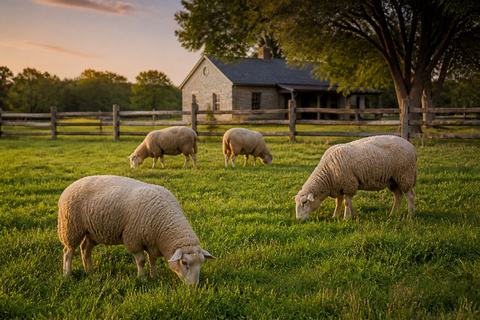
Sheep: it's a predator fence first, a containment fence second
Per PB1541, a sheep fence doesn't need cattle-fence height, but predator control is the real design driver — electric fencing is specifically useful against dogs and coyotes, the leading cause of lost lambs for a lot of small flocks. Skip barbed wire entirely for sheep: their wool catches on every barb, and a tangled, injured animal is worse than an escaped one. Washington State University Extension's comparison of fence types puts woven wire for sheep and goats at 48 inches. Electric voltage for long-haired sheep runs around 2,000 volts, the same target as long-haired cattle.
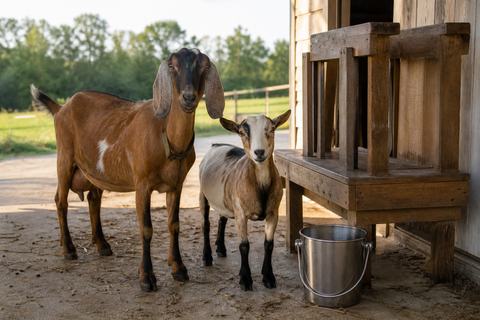
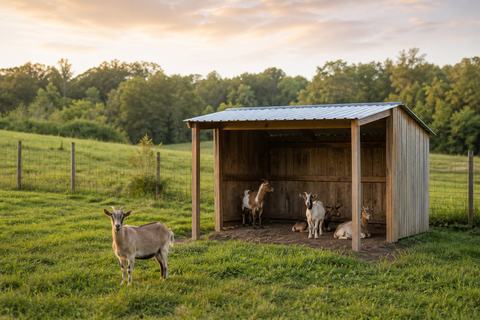
Goats: they crawl under before they ever try to jump over
Goats get their own section because they break more rules than any other animal on this list. Oklahoma State University's meat-goat fencing chapter puts woven wire at a minimum of 39 inches to stop climbing, while the goat-specific program at Extension's goats.extension.org recommends going taller still — at least 42 inches for a perimeter fence. The gap between those two numbers is really a gap between "contains most goats" and "contains a determined climber," so build toward the taller number if you can.
For electric fencing, Extension's goat program specifies 4–5 strands of high-tensile wire on a permanent perimeter, spaced 6–8 inches apart near the ground and 8–12 inches apart toward the top, charged to 4,500–9,000 volts at all times. The single most important line in that guidance: keep the bottom wire close to the ground, because goats go under a fence far more often than they jump it. If jumping is still a problem after that, add a high or offset wire about a foot inside the fence near the top, rather than just going taller across the board.
Oklahoma State's chapter adds a warning specific to goats with horns: woven wire with 6-by-6 or 6-by-12 inch openings lets horned goats get their heads caught, especially where a T-post splits a larger opening in half. Keep vertical wire spacing under 6 inches wherever horned goats will be on the fence. And skip diagonal corner braces — goats climb them like a ladder and walk right over the top. Use H-braces or deadman anchors at every corner instead. One more goat-specific note: electric netting works, but goats need to be trained to respect it before they're turned loose on it, or they'll tangle their horns trying to push through.
Horses: visibility matters more than voltage
Horses are the one animal on this list where the main design goal isn't containment strength, it's making sure the horse can actually see the fence before it gets there. PB1541 is blunt about barbed wire here: avoid it, since a horse can tear its hide open on the barbs in a way that doesn't happen with slower-moving livestock. Plain high-tensile wire is risky too — horses can get a leg tangled in it, especially if they startle. If you use it, set posts closer together and hang visibility ribbons on the wire. The preferred options are board fences, or woven wire with a single visible board along the top. For electric fencing, extra-wide polytape is easier for a horse to see than thin polywire, and that visibility is most of the safety benefit. Voltage: at least 700 volts for short-haired horses.
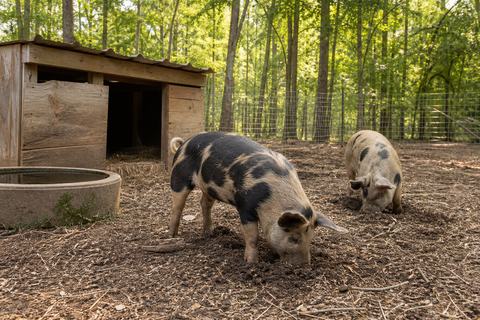
Pigs: the fence has to work below ground, not just above it
Ontario's agriculture ministry (OMAFRA) fencing guide for outdoor pigs flags something none of the other species need: pigs go through a fence by digging under it, not by jumping or pushing through wire. The fix is a mesh skirt buried about 24 inches (60 cm) deep and bent 90 degrees outward at the bottom, which the guide calls out as the single biggest factor in keeping a determined pig contained. Above ground, adult pigs need fencing at least 59 inches (1.5 m) tall since they can jump, with the bottom electric wire run tight and close to the ground — letting it sag or ride too high is one of the most common mistakes OMAFRA lists. A "gold standard" design combines a physical fence (page wire or a double row) with electric wire run between or alongside it, since pigs that successfully test one fence type will keep testing it.
Training matters here too: a pig's first reaction to touching an electric fence is often to jump forward, not back. OMAFRA's fix is to set the electric wire in front of a solid barrier, like a barn wall, so a startled pig bounces backward away from the fence rather than through it. Skip barbed wire for pigs entirely — it can injure them, and it's especially harmful to a sow's udder. And secure every post well: a pig can lift a loose post right out of the ground with its snout.
Electric fence basics that apply across every species above
Virginia Tech's energizer sizing guide (SPES-689) gives a simple rule of thumb: about one output joule per mile of fence, adjusted up or down for soil, vegetation and climate. Buying a somewhat larger energizer than you need right now leaves room to add fence later without losing performance — undersizing the energizer is one of the most common mistakes in the whole guide.
- Mains-powered (plug-in): the most cost-effective option per joule, commonly available up to 30 output joules, with low electricity use and little maintenance once installed correctly.
- Solar: portable and battery-backed, usually under 1 joule (larger units reach about 2). Best for areas with no electrical service, or temporary fencing.
- Deep-cycle battery: mostly superseded by solar now; keep the battery above 50% charge (above 11.6 volts) to protect its lifespan.
Grounding size scales with energizer output — more joules need more ground rods. PB1541 specifies keeping ground rods at least 50 feet from any utility or underground telephone/power line, and VT's guide independently recommends keeping the energizer itself more than 33 feet from a building's own grounding system to reduce lightning-strike damage. When sizing a controller for a fence that includes electrified sections, add roughly 25% to the total electrified mileage to account for line loss.
The short version
Match the fence to the animal's actual escape method, not just its size: cattle need height and either enough wire or enough voltage, sheep need predator protection more than a tall fence, goats need a low bottom wire and a tall top one, horses need visibility above all else, and pigs need a buried skirt below ground as much as a tall fence above it. One joule per mile is the energizer starting point for any of them, and the grounding and signage rules apply no matter which animal is on the other side of the wire.
Printable plans for every fence type above
The Ultimate Livestock Fencing Guide is a 100-page build manual covering electric, woven wire, barbed wire and panel fencing for poultry, goats, sheep, pigs, cattle, horses and guardian dogs, with cost/effort/durability comparison tables and step-by-step installs. Working out what your own fence run will actually cost? Our free fence cost calculator uses the same price data.
Browse the shop →More Goats, Sheep, Pigs & Cows guides
- Sources:
- University of Tennessee Extension — PB1541, Fencing Systems
- Oklahoma State University Extension — Meat Goat Production, Chapter 11: Fencing
- eXtension — Goat Pastures & Fences
- Washington State University Extension, Skagit County — Farm Fencing Systems for Livestock
- Virginia Tech Extension — SPES-689, Electric Fence Energizers
- Ontario Ministry of Agriculture, Food and Rural Affairs — Fencing for Outdoor Pig Production