Growing a Backyard Berry Patch: Blueberries, Strawberries & Raspberries for Beginners
One soil mistake can leave a blueberry bush slowly starving for a decade, and the fix has to start a full year before the plant goes in the ground. Each of the three most popular backyard berries has one make-or-break detail like this — here's all three, from university extension research.
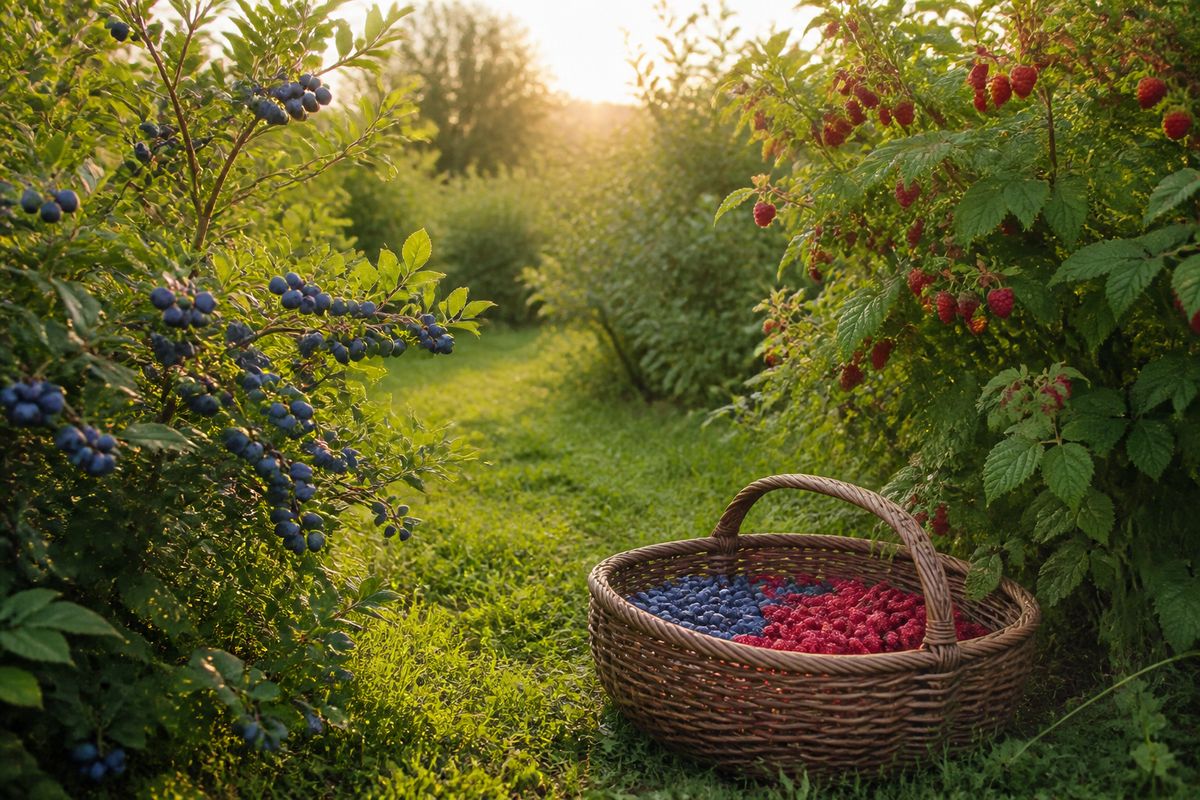
Berries are one of the best first perennial crops for a new homestead: plant them once and, done right, they keep producing for years with far less year-to-year labor than an annual vegetable bed. But "done right" matters more here than with most vegetables, because mistakes in a perennial planting don't just cost you this season — they can cost you every season after it. This guide covers the one detail that matters most for each of the three most common backyard berries: blueberries, strawberries, and raspberries.
Blueberries: why soil pH decides whether they survive at all
Of the three, blueberries are the least forgiving. Penn State Extension's guidance on home blueberry plantings is blunt about it: soil pH needs to be between 4.5 and 5.0 — well outside the range most garden soil naturally sits at. Outside that narrow band, the plant physically cannot access the nutrients it needs: too high a pH and iron becomes unavailable (plants yellow and stall), too low and manganese or aluminum can reach toxic levels instead.
The timing matters as much as the number. Penn State recommends starting soil amendments a full year before planting — test the soil first (a county extension office can do this), then apply sulfur and magnesium in fall, since both move through soil slowly and need time to take effect. Mix plenty of moist peat moss into the planting hole itself, and plan on maintaining a 4-inch mulch layer of hardwood bark or rotted sawdust going forward (skip mushroom compost and any untested amendment — both can push pH the wrong direction).
Beyond pH, blueberries need consistent moisture and are genuinely cold-hardy (many varieties tolerate down to -20°F), but most need around 750 hours of winter temperatures below 45°F to break dormancy properly and flower on schedule — worth checking against your own winter before choosing a variety.
Strawberries: pick your type before you pick a spot
Oregon State Extension's home strawberry guide splits backyard varieties into three types, and the type you choose decides how much space you need and how you'll manage the bed:
| Type | Harvest pattern | Runners | Best system |
|---|---|---|---|
| June-bearing | One large crop, early summer | Most — fills in a bed on its own | Matted row: 15 in. apart, rows 3–4 ft apart |
| Everbearing | Two crops: early summer + late summer | Fewer | Hill system: 12–15 in. apart, 1.5–2 ft aisles |
| Day-neutral | Continuous, except below 40°F or above 90°F | Fewest — good for containers | Hill system, same spacing as everbearing |
June-bearers are the classic choice if you want one big harvest for freezing or jam, and because they throw off the most runners, they're genuinely low-maintenance once established — Oregon State recommends renovating the bed 1–2 weeks after harvest by mowing leaves to about 2 inches above the crown, narrowing the matted row back to 10–12 inches wide, and fertilizing to push regrowth for next year. Day-neutral types are the better pick if you want strawberries spread across the whole season (or in a container on a deck) rather than one big batch.
Raspberries: the pruning rule that decides your whole crop
Raspberries split into two pruning categories, and University of Minnesota Extension's guidance is clear that mixing them up costs you fruit:
- Fall-bearing (primocane) varieties are the easiest to maintain: cut every cane to the ground each year, in late fall or early spring while dormant. New canes grow from the ground each spring and produce a full crop the same year — there's nothing from last year's canes worth saving.
- Summer-bearing (floricane) varieties need a gentler hand: only remove the spent canes that already fruited (look for old, dried fruit clusters on the tops and side branches) in late fall or early spring. The canes that didn't fruit yet — last year's new growth — need to stay, because those are this year's fruiting canes. Thin only if the row gets crowded, aiming for roughly one cane every 6 inches.
Siting the patch
All three berries want the same basics: full sun (6–8 hours minimum) and soil that drains well rather than holding standing water, which is as much a problem for raspberry and strawberry roots as the wrong pH is for blueberries. Give raspberries their own bed away from wild blackberries or neglected raspberry patches nearby, since shared diseases and pests spread easily between them.
A simple first-year plan
Test your soil pH before buying a single blueberry plant — if it's not already in the 4.5–5.0 range, start amending this fall for a planting next spring rather than planting into soil that will fight the plant for years. Decide how much space you actually have and pick a strawberry type to match (a small bed or containers point toward day-neutral; a dedicated row points toward June-bearing). And when the raspberry plants arrive, write down which type they are before they're in the ground — it's the one label you don't want to lose track of come pruning season.
Go deeper on each berry
Each of these crops has enough to it for a full guide of its own — site prep, planting steps, pest and disease basics, harvest timing, and real recipes for using the harvest. Check out The Homestead Blueberry Patch, The Homestead Strawberry Patch, and The Homestead Raspberry Patch guides.
Browse the shop →