Winterizing a Beehive: A Beginner's Guide to Insulation, Moisture & Starvation Risk
A honey bee colony doesn't fight winter the way you'd guess. It clusters into a tight ball of several thousand bees, shivers its wing muscles, and holds the center of that cluster above 85°F through months of below-freezing weather — with no heater and no insulated walls of its own. What actually kills most overwintered colonies isn't the cold itself. It's running out of food, or getting wet. The frustrating part for a beginner: the fixes for those two risks can work against each other if you don't know what you're doing.
Already raising bees and want the season-by-season basics? Start with our beekeeping guide. This article goes deep on the one job that decides whether a colony is still alive come spring.
How a cluster actually survives the cold
Bees don't heat the hive box the way a wood stove heats a cabin. Instead, the colony — several thousand "winter bees" plus the queen — draws together into a dense cluster and generates heat by vibrating their flight muscles, eating stored honey for the fuel to do it. The center of that cluster stays above 85°F even when the air outside is well below freezing, while the outer bees rotate in and out to spread the work. The cluster also slowly migrates through the hive as it works through its honey stores, which is part of why a colony needs those stores arranged where the cluster can actually reach them, not just somewhere in the box.
Checking hive weight without opening the lid
You can't do a frame-by-frame inspection in the cold without risking the cluster — so weight, not a visual count, is how you judge whether a colony has enough food. Utah State University Extension puts a fully capped, established colony's winter target at roughly 80–100 lb of honey, about 10 to 12 deep frames filled on both sides. The safe way to check:
- On a calm day above 55°F: you can open the hive briefly for a real look, but work quickly and don't linger.
- On a colder day: don't open it at all. Check the entrance for blockage, clear deep snow away from it, and gently lift the back of the hive by hand to judge whether it still feels heavy. A hive that suddenly feels light is your cue to feed, not to inspect.
Feeding on a schedule, not a guess
Per USU's seasonal guidance, feeding changes form as the weather turns:
- Fall (around September): if a hive feels light on a heft check, feed heavy syrup at a 2:1 ratio (2 parts sugar to 1 part water) so the colony can convert and cap it as real stores before cold weather sets in. Stop feeding syrup once temperatures are near freezing or the bees stop taking it down — syrup that never gets capped is just wet sugar sitting in the hive.
- Winter: once it's too cold for syrup, switch to solid feed. If a heft check finds the hive light, place fondant (or a candy board) directly above the cluster on a calm, mild day, and close the hive back up quickly. The bees can reach solid feed placed right above them without needing to break cluster to forage for it inside the box.
The real killer is often water, not cold
This is the part that trips up a lot of first-winter beekeepers: the instinct to seal a hive up tight against the cold is exactly the wrong move. USU is explicit on this point: do not seal the hive airtight. The cluster's own metabolism produces warm, moist air, and that air needs somewhere to go. Trapped inside a sealed box, it condenses on the cold underside of the lid and drips back down onto the cluster — and a cold, damp colony is in far more danger than a cold, dry one.
A moisture-absorbing cover, quilt box, or winter-specific lid can help pull that moisture out before it condenses and drips. How much this actually changes outcomes is genuinely debated even among researchers: an Ask Extension response citing research from Michigan State University found no major difference in colony survival between hives wintered with a wrap-plus-moisture-board setup and hives wintered without one — but the same response still notes that "too much moisture in the hive can be stressful for colonies," and that if you do add top insulation, it works best placed between the inner and outer cover, which leaves clear space directly above the frames and makes the bees less likely to chew or remove it.
Mouse guards, entrance reducers & windbreaks
Per USU's fall checklist, these are small jobs with real payoff, best done in September while it's still comfortable to work the hive:
- Entrance reducer: a smaller opening helps a weakened fall colony guard against robbing by other bees and cuts down on cold wind blowing straight into the hive — while still leaving enough airflow for the moisture management above to work.
- Mouse guard: a reduced entrance that still lets bees pass but keeps mice from moving into the warm, quiet hive for the winter. Fit it so it doesn't also block the bees themselves.
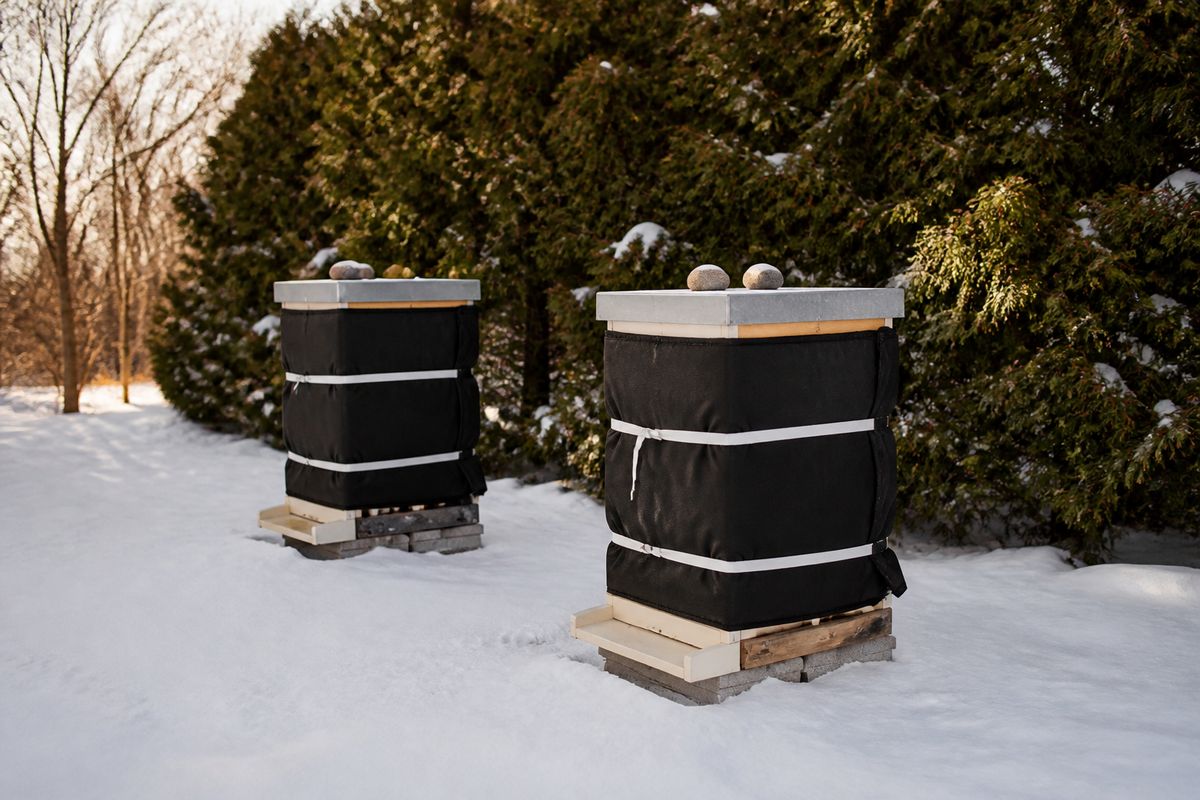
- Windbreak or wrap: matters most for hives in genuinely exposed or high, windy sites. A hive tucked into a protected spot (a building, a hedge, a fence line) often doesn't need a wrap at all, even in a climate where an exposed hive nearby would.
- Secure the lid: make sure rain, snow, and wind can't get in or lift it off over the winter — a surprisingly common and entirely preventable way for a hive to flood.
Treating for mites before the window closes
USU recommends checking Varroa mite levels back in August, while the weather still allows a full inspection, and treating according to the product label if levels warrant it. Timing the actual treatment matters almost as much as doing it: Penn State's Department of Entomology notes that an oxalic acid dribble treatment is best applied late in fall, specifically after brood rearing has stopped for the season. With no capped brood left for mites to hide inside, a fall treatment reaches far more of the mite population in one pass than the same treatment would during the brood-rearing months — and keeping mite levels down heading into winter is one of the clearer levers a beekeeper actually has over whether a colony makes it to spring.
A simple fall-to-winter timeline
Pulled together from USU's own month-by-month structure:
- August: check mite levels and heft-check honey stores while you can still do a real inspection.
- September: feed 2:1 syrup if the hive is light, reduce the entrance, and add a mouse guard.
- October: final checks — confirm stores are trending toward that 80–100 lb target, secure the lid, and wrap or windbreak any exposed hives.
- November through February: minimal disturbance. Heft-check periodically on calm days; feed fondant above the cluster if a check finds the hive light.
Come spring, don't assume a quiet hive made it through — our beekeeping guide's own seasonal calendar covers what a first real spring inspection should check for, and what to do if a colony didn't survive.
The short version
A winter colony's two real enemies are starvation and trapped moisture, not cold on its own — bees are built to handle genuine cold, just not a wet, airless box. Heft-check instead of opening the hive in cold weather, feed on the fall-syrup/winter-fondant schedule rather than by feel, keep a path for moist air to escape even when every instinct says to seal things up tighter, and treat for mites in the fall window while brood rearing has already stopped. None of it requires fancy equipment — just doing each piece at the right time.
Keep your own hive's winter-prep record
Our Beekeeping & Apiary Record Book has a dedicated hive-inspection and feeding log to track exactly the heft checks and feeding dates this guide walks through, year over year. Building or upgrading your setup for winter? The Backyard Beehive Build Guide covers the Langstroth box dimensions and construction details referenced above. For the other side of the calendar, see our guide to harvesting and extracting honey — including how much to leave behind for exactly this winter ahead.
Browse the shop →