Season Extension for Your Garden: Hoop Houses vs. Cold Frames for Beginners
A cold frame can nudge your harvest a few weeks earlier in spring or later in fall. A hoop house can add two full months on each end of the season. Knowing which one your garden actually needs saves you from building the wrong structure — or overbuilding for what you actually grow.
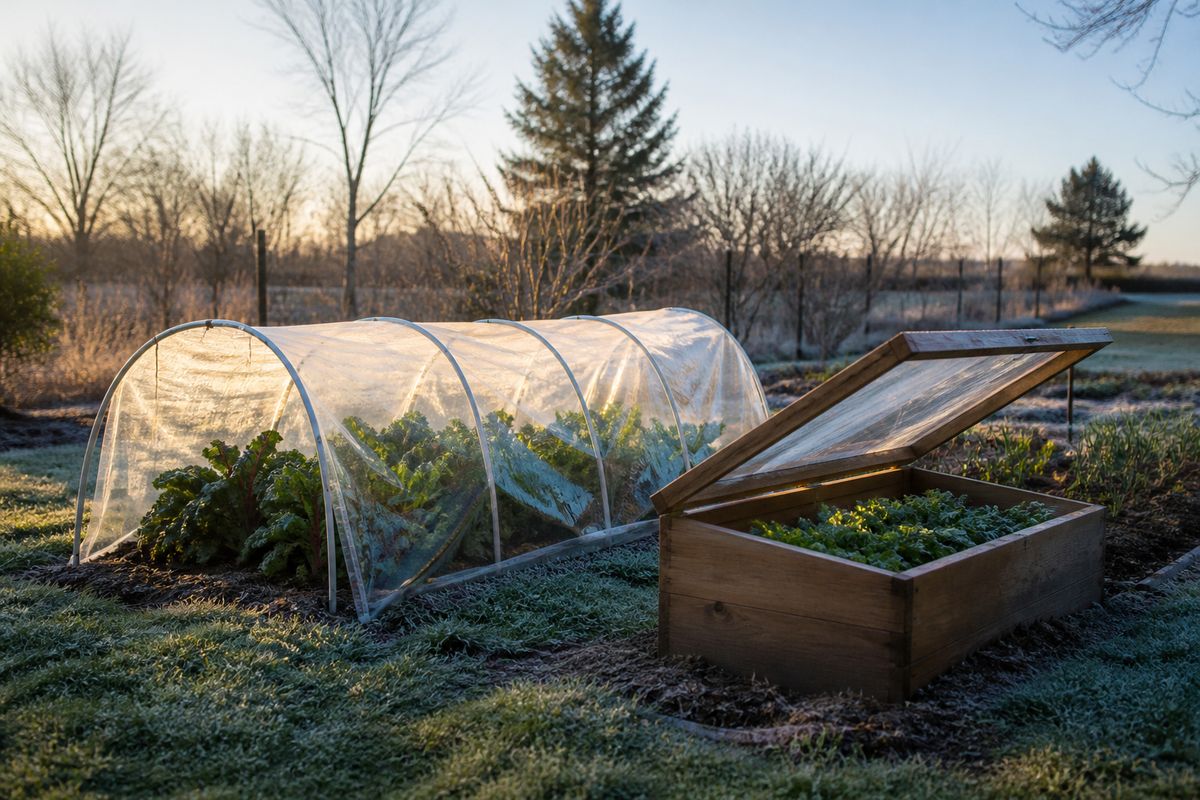
Season extension isn't one technique, it's a ladder of structures — each one a bigger investment that buys more protection from cold. Understanding where each rung actually helps keeps you from building a greenhouse when a cold frame would have done the job, or fighting a cold frame's limits all spring when what you really needed was a hoop house.
The four tools, compared
NC State Extension's Gardener Handbook lays out the ladder clearly, from least to most protection:
| Structure | Best for | Frost protection |
|---|---|---|
| Row covers / low tunnels | Spring planting, insect & disease screening | About 4–5°F |
| Cold frames / hot beds | Hardening off seedlings, cool-season crops, early spring & late fall | Moderate (sun-powered; hot beds add heating cables or fresh manure) |
| Hoop houses / high tunnels | Weeks of extended spring/fall growing season | Some; mainly gradual warming over time |
| Greenhouses | Year-round growing, seedling propagation | Complete, when heated |
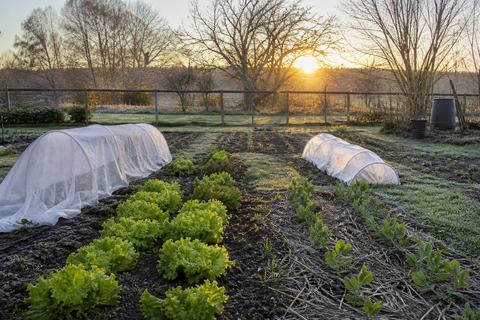
Row covers are the cheapest, lowest-commitment option worth trying first — spun-bond polyester fabric laid directly over plants or held above them on wire hoops. They need to come off during bloom on pollination-dependent crops once temperatures climb past 90°F, but for a few weeks of frost protection on spring transplants, they're hard to beat for the cost.
Cold frames: the simplest structure that actually works
Iowa State University Extension describes a cold frame as just two parts: a frame and a transparent cover. The frame can be built from wood, cinderblock, brick, concrete, plastic lumber, or even straw bales — and the cover doesn't need to be anything fancy. An old glass storm window, window sash, or shower door works well, as do clear plastic or rigid fiberglass panels, mounted on hinges so it opens easily.
Siting matters: face the frame south for maximum sun, and put the north (tall) side against a house, garage, or fence to cut heat loss. Keep the frame no more than 3 feet deep so you can reach the back, and build it sloped — about 12 inches tall in front, 18 inches in back — to catch low-angle sun.
Cold frames are built for cool-season crops — lettuce, spinach, radishes — letting you start them 2–4 weeks earlier in spring or keep them going into November in fall. They also do double duty as a hardening-off station for tender seedlings before they go into the open garden.
Hoop houses (high tunnels): when you need more than a cold frame
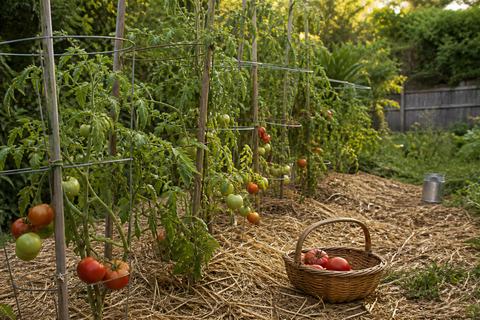
A high tunnel is a step up in every dimension. Oklahoma State University Extension's definition is specific: it has to be tall enough to walk upright inside and support trellised crops like tomatoes — that's what separates a true high tunnel from a low tunnel (2–3 feet tall, really just a tall row cover).
Construction is straightforward compared to a greenhouse: aluminum or galvanized steel tubing bent into bows, covered in 6-mil polyethylene plastic, with poles sunk 2–3 feet into the soil (no concrete pad needed) for storm resistance. There's no fixed size requirement — Oklahoma State notes working examples anywhere from 14×30 feet up to 30×96 feet, and some growers build smaller tunnels on skids so the whole structure can be moved for crop rotation.
Ventilation works differently than a cold frame: sidewalls roll up and down on both sides, and growers open and close them morning and evening to manage temperature rather than propping a single lid. The heat itself comes from passive solar radiation warming both the air and the soil through the day.
What a hoop house buys you, in practical terms: tomatoes pushed later into fall, leafy greens, peas, and radishes grown right through winter in many regions, and even strawberries, raspberries, and blackberries extended from May into November further north than they'd otherwise survive outdoors.
Which one does your garden actually need?
If the goal is a few weeks' head start on lettuce or protecting transplants from one late frost, a cold frame (or even just a row cover) solves it for a fraction of the cost and labor of a hoop house. If the goal is genuinely stretching the growing season by months — tomatoes into November, greens all winter, or berries surviving a harsher climate than they'd normally tolerate — that's a hoop house's job, and a cold frame will never get you there no matter how well you manage it.
Ready to build one?
Full construction plans for both are in the shop: the Hoop House Build Guide for season-long protection, or the Cold Frame Build Guide for a smaller, simpler start. Planning out what to actually grow once you've got the structure? The Homestead Garden Master Planner covers sowing timing, bed layout, and a full harvest/yield system.
Browse the shop →