Building a Hunting Blind: A Beginner's Guide to Site Selection, Wind & Elevated Safety
A beautifully built blind in the wrong spot — downwind of the wrong slope, or ten feet off a neighbor's fence line — will sit empty while the deer walk around it. Where you put a blind matters at least as much as how well you build it, and the elevated part of "elevated hunting blind" comes with its own, separate set of rules.
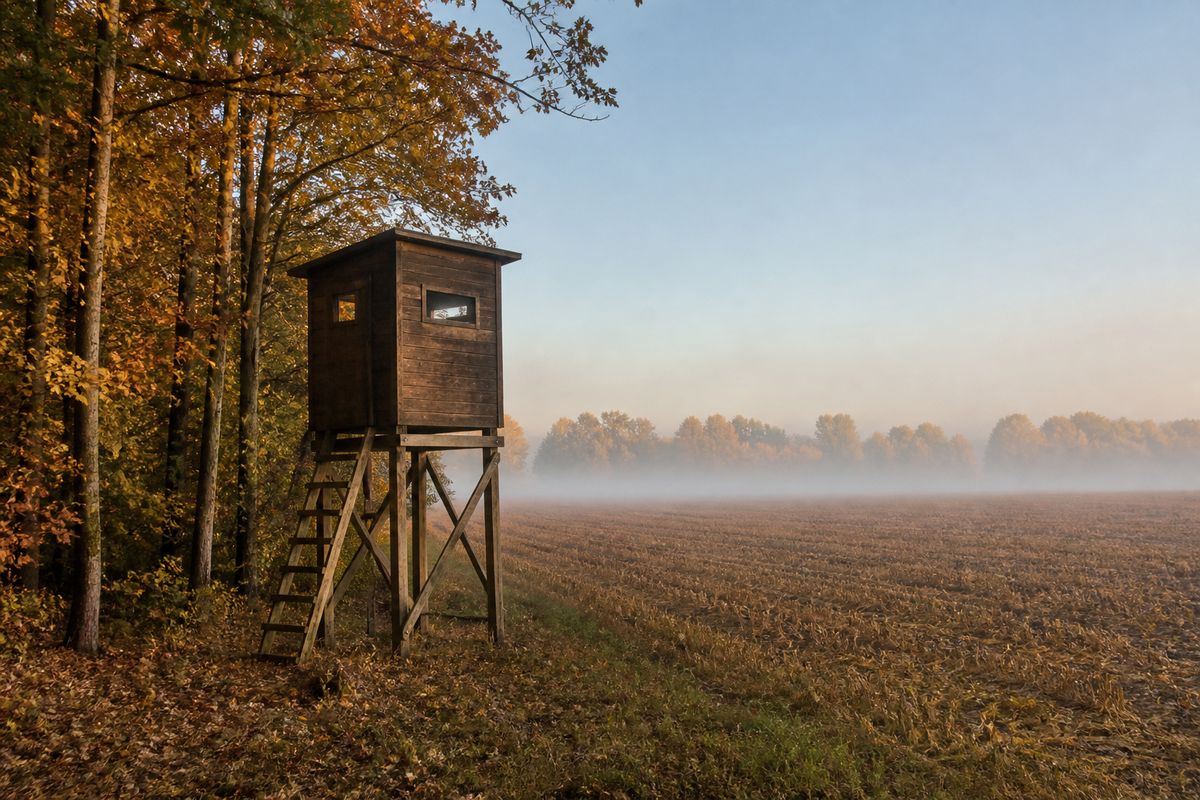
This guide covers the two things worth getting right before you cut a single board: picking the site, and treating the structure itself as what it actually is — a permanent elevated platform, not a piece of furniture.
Start with permission and the property line, not the view
Texas Parks & Wildlife Department's hunter education course puts this ahead of every tactical consideration: always get the landowner's permission before building or setting up a blind or stand, and make sure they sign off on the specific location, not just the general idea. If you're hunting your own land, that's a formality — but it's worth treating site placement itself the same way regardless.
The same source is direct about one specific mistake: don't place a blind or feeder near a property boundary. It calls this dangerous, unethical, and inconsiderate to neighbors — a shooting lane that looks clear from inside the blind can run straight across a line you can't see from there. Set back from boundaries by more than you think you need to, and if you're building something permanent enough to need a materials list and a build weekend, check your local zoning or building department for any setback or permit rules that apply to a fixed structure before you start, the same way you would for a shed or a cabin.
Read the wind before you pick a spot
The Missouri Department of Conservation's stand-site guidance treats wind as the central variable, not an afterthought: position the blind so your scent drifts away from where deer actually travel, not just away from where you're standing. A few things most beginners don't account for on the first try:
- Ridge tops hold the steadiest wind. Valleys and drainages swirl, which can carry scent in directions you didn't plan for.
- Thermal currents shift through the day independent of the wind you feel at ground level: air cools and sinks in the evening, then rises back up valleys after sunrise — MDC notes this effect is strongest on sunny days.
- Scout the site across a season before committing. Spend time on the property in the off-season and actually watch how air moves at different times of day; topography, cloud cover, and wind speed all change the answer.
- Aim your scent at dead ground. Ideally your scent cone blows toward an area deer rarely use at all — a pond, a road, a steep drop-off — rather than just "downwind."
Plan your approach and exit route with the same wind logic. Getting into the blind without being smelled or heard only to spook everything on the walk out defeats the point of the whole structure.
Elevated vs. ground-level: what height actually buys you
MDC's comparison of elevated stands to ground blinds is a useful way to think about why so many permanent hunting blinds are built on a platform in the first place: height improves visibility at longer range, helps keep your scent above a deer's nose rather than right at it, reduces the noise that reaches the ground, and — done right — keeps you out of a deer's direct line of sight. A ground-level blind puts your scent exactly where deer are walking and gives you a shorter sightline, which is why wind direction matters even more for a ground blind than an elevated one.
Whichever height you build at, add natural cover around the structure rather than leaving it stark against the treeline. MDC's guidance for ground blinds — brush and grass worked in around the blind so it blends into its surroundings — applies just as well to the base and approach of an elevated one; deer are wary of any new object in a familiar space, and a blind that looks like it grew there gets used a lot longer than one that looks built yesterday.
Treat it as an elevated structure, not a treehouse
A platform blind shares its real risk profile with a tree stand, not with a shed: the danger isn't the deer, it's the fall. The University of Illinois Extension cites an Illinois Department of Natural Resources finding that 90% of non-firearm, non-bow hunting accidents from 2015–2019 involved a hunter falling from an elevated stand — and most deer stands sit 10 to 18 feet up. Mississippi State University Extension's tree stand safety guidance and Illinois Extension both treat the climb and the platform the same way a construction crew would treat a scaffold:
- Wear a full-body harness whenever you're off the ground — not just once you're high up. One Illinois Extension safety instructor's line on this is blunt: "Whenever you are off the ground, even if it's 1 foot, you need to wear a safety harness that is attached to the tree." A fall from five feet can still cause real injury.
- Stay connected from the moment you start climbing until both feet are back on the ground, not just once you reach the platform. Don't disconnect to work around a rail, a branch, or an awkward step.
- Inspect the structure every season, not just when it's new. Check welds, bolts, screws, and connection points for looseness or corrosion; shake wooden components and look for rot or insect damage; check ladder rungs and the platform itself for anything that's come loose over a winter outdoors.
- Build and install with a partner, not alone, and don't try to finish the install the same day you plan to hunt — rushing either job is exactly the condition under which people get careless.
- Use a haul line for gear instead of carrying it up the ladder in your hands, and climb slowly enough that you're never in a hurry on the ladder or stairs.
The short version
Get permission for the exact spot, not just the general area, and keep real distance from property lines. Pick the site by wind and thermals, not just by where the view looks best, and brush the structure in so it stops looking new. Then treat the platform itself like scaffolding — full-body harness connected from the first step off the ground, a seasonal inspection before anything gets climbed, and a partner on build day. None of that is complicated; it's just the part that's easy to skip when the exciting part is picking where to put the thing.
From site selection to a finished build
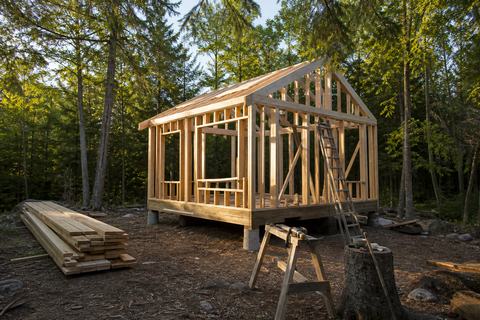
This article covers where to put it and how to stay safe once it's up; the Elevated Hunting Blind Build Guide is a step-by-step printable plan for a 4x6 ft box blind on a 6 ft platform — post layout, cut list, hardware, and a full build sequence from the ground up.
Browse the shop →